

Table of Contents
- What Is Data Observability?
- Why Modern Data Infrastructure Is Becoming Harder to Monitor
- Data Monitoring vs Data Observability
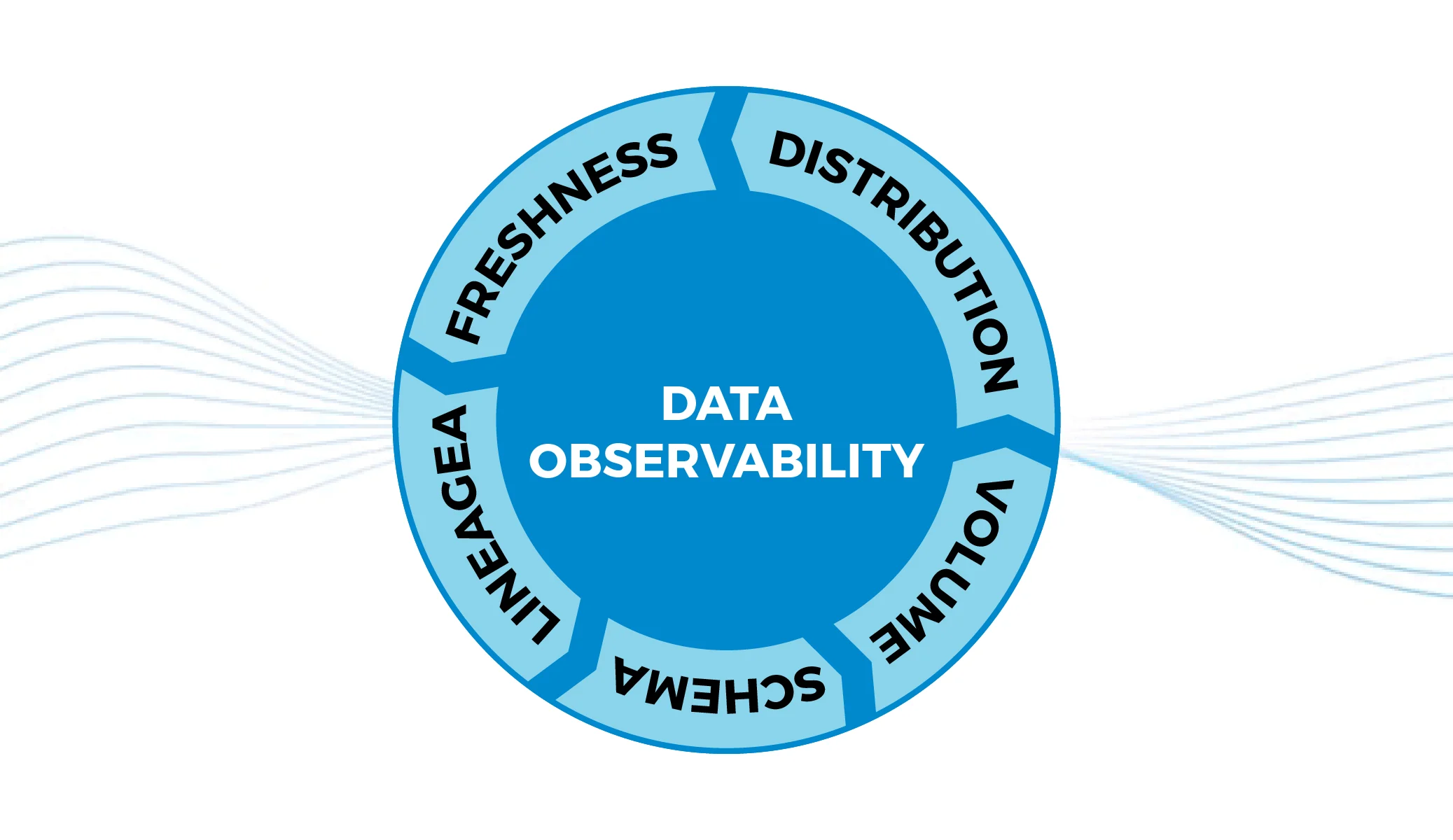
- The Five Important Areas of Data Observability
- Why Data Quality Alone Is Not Enough
- The Business Impact of Poor Data
- How Data Observability Helps Data Teams
- Data Lineage and Observability
- Data Observability and Data Lineage Are Different
- How Data Observability Supports Data Engineering
- Data Observability and Data Governance
- Data Observability for Machine Learning
- Data Observability and AI
- How to Build a Data Observability Strategy
- What Makes a Good Data Observability Platform?
- Common Challenges When Implementing Data Observability
- The Future of Data Observability
- Data Observability Is Becoming a Core Data Infrastructure Layer
- Conclusion
Modern businesses depend on data for almost every important decision. Sales teams use it to understand customers, finance teams use it to forecast revenue, marketing teams use it to measure campaigns, and leadership teams use it to guide strategy.
But as data infrastructure becomes more complex, keeping data reliable has become increasingly difficult.
Data now moves through cloud warehouses, data lakes, pipelines, applications, APIs, transformation tools, dashboards, and machine learning systems. A problem in one part of this environment can quickly affect many other systems.
A dashboard may show incorrect numbers. A financial report may contain outdated information. A machine learning model may receive incomplete data. A customer-facing application may use incorrect records.
The problem is not always that data has disappeared. Often, the data is present but something about it has changed.
This is where data observability becomes important.
Data observability provides organizations with a way to understand the health of their data across the entire data environment. It helps teams identify problems, understand their impact, investigate the source of an issue, and respond before unreliable data creates larger business problems.
As modern data infrastructure continues to grow, data observability is becoming an important layer between data systems and the people who depend on them.
What Is Data Observability?
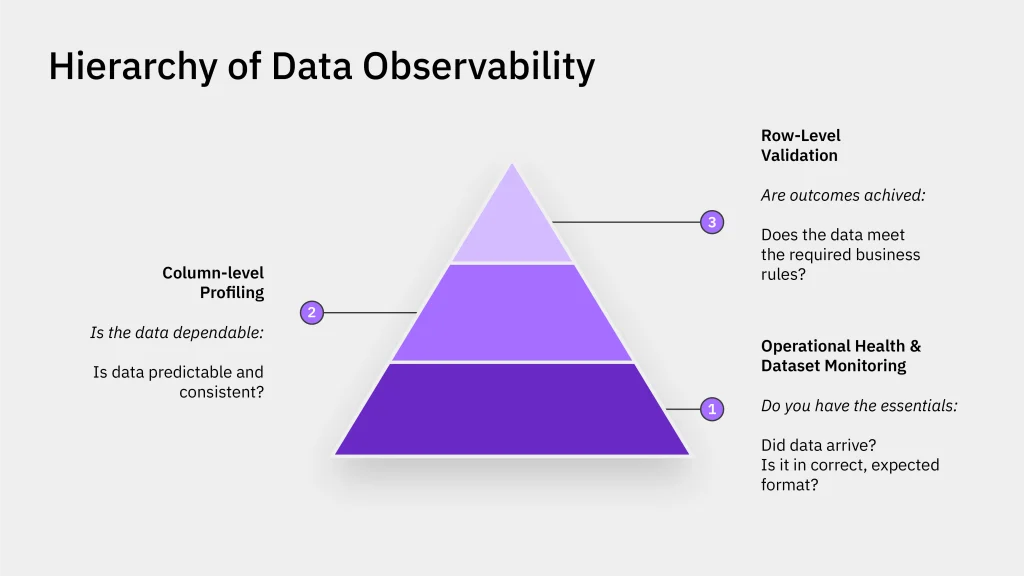
Data observability is the practice of continuously monitoring data systems to understand whether data is healthy, reliable, complete, and available when needed.
It goes beyond checking whether a data pipeline is running.
A pipeline can complete successfully while still producing incorrect results.
For example, imagine an ecommerce company has a daily sales pipeline. The pipeline runs successfully, but a change in the source system causes the sales amount field to become empty for thousands of transactions.
From a pipeline monitoring perspective, everything may appear normal.
From a business perspective, the data is broken.
Data observability helps identify these types of issues by monitoring the condition of the data itself as well as the systems that move and transform it.
Common areas of data observability include:
- Data freshness
- Data completeness
- Data accuracy
- Data volume
- Data distribution
- Schema changes
- Pipeline performance
- Data dependencies
- Data lineage
- Anomalies and unexpected changes
The goal is simple: help organizations know when their data cannot be trusted and why.
Why Modern Data Infrastructure Is Becoming Harder to Monitor
Older data environments were often relatively simple.
A company might have had a small number of databases, a few scheduled jobs, and a limited number of reports.
Modern data environments can look very different.
A typical organization may use:
- Cloud applications
- Customer relationship management systems
- Enterprise resource planning systems
- Data warehouses
- Data lakes
- Data transformation tools
- Business intelligence platforms
- Streaming systems
- APIs
- Machine learning platforms
- Third-party data sources
- Internal applications
Data can move between many of these systems every day.
This creates dependencies.
If one source changes its structure, downstream systems may be affected. If a pipeline stops running, reports may become outdated. If a transformation introduces an error, incorrect data may reach several teams.
As the number of systems grows, manually checking everything becomes unrealistic.
Data observability helps organizations manage this complexity by providing a broader view of data health.
Data Monitoring vs Data Observability
The terms data monitoring and data observability are sometimes used interchangeably, but they are not exactly the same.
Data monitoring usually focuses on predefined checks.
For example:
- Is the pipeline running?
- Did the table update today?
- Are there enough records?
- Did a scheduled job complete?
These checks are useful, but they may not explain why a problem occurred.
Data observability takes a broader approach.
It looks at multiple signals to help teams understand:
- What changed?
- When did it change?
- Which data is affected?
- What systems depend on it?
- What caused the change?
- Which business processes could be impacted?
In simple terms, monitoring can tell you that something is wrong, while observability aims to help you understand what is wrong and why.
The Five Important Areas of Data Observability
Although different organizations define data observability differently, several areas are commonly monitored.
1. Freshness
Freshness measures how current the data is.
For some businesses, data can be several hours old without causing problems.
For others, outdated data can create serious issues.
For example, a real-time pricing system may require current information, while a monthly management report may not.
Data observability can help teams identify when data has not been updated within the expected timeframe.
2. Volume
Volume refers to the amount of data being produced or processed.
Unexpected changes in volume can be an important warning signal.
Suppose a company normally receives 500,000 transactions per day but suddenly receives only 50,000.
The pipeline may still complete successfully, but the major drop in volume suggests that something may have gone wrong upstream.
Similarly, an unexpected increase in data volume may indicate duplicate records, a system error, or an unexpected source change.
3. Schema
A schema defines the structure of data.
It can include:
- Column names
- Data types
- Relationships
- Required fields
- Table structures
A seemingly small schema change can cause major downstream problems.
For example, if an application changes a field from a number to text, a transformation process may fail or produce unexpected results.
Schema monitoring helps teams detect these changes before they spread through the data environment.
4. Distribution
Data distribution looks at the values within a dataset.
Suppose a company’s customer database normally contains customers from several countries. Suddenly, 95% of new records are assigned to one country.
The data may still have the correct structure and volume, but the distribution has changed dramatically.
This could indicate a source system problem, incorrect mapping, or another data quality issue.
Distribution monitoring helps identify unusual patterns that basic pipeline checks may miss.
5. Completeness
Completeness measures whether expected data is present.
For example, a customer database may require an email address for every active customer.
If thousands of new records suddenly contain no email address, the dataset may still load successfully, but the business value of that data has decreased.
Completeness checks can help detect these changes.
Why Data Quality Alone Is Not Enough
Data quality is an important part of data observability, but it is not the whole picture.
A company can have high-quality data in one system while still experiencing problems elsewhere.
For example, a database may contain accurate information, but the pipeline that moves that information into a reporting system may be delayed.
The data itself is correct, but it is not available when the business needs it.
This is why modern organizations need to think about both data quality and data reliability.
Data observability provides a broader framework for understanding both.
The Business Impact of Poor Data
Poor data is not simply a technical problem.
It can affect revenue, customer experience, compliance, operational efficiency, and decision-making.
Incorrect Business Decisions
Leadership teams depend on reports and dashboards to understand business performance.
If those reports contain incorrect information, decisions may be based on false assumptions.
Lost Revenue
Sales and marketing teams rely on data to identify opportunities and understand customers.
Incorrect or incomplete data can result in missed leads, poor targeting, or inaccurate revenue forecasts.
Customer Experience Problems
Customer-facing systems often depend on data.
If customer records are incorrect or outdated, employees may provide inaccurate information or customers may receive irrelevant communications.
Compliance Risks
Many organizations have strict requirements for managing sensitive information.
Data quality problems can make it harder to meet reporting, privacy, or compliance requirements.
Higher Engineering Costs
Without effective data observability, engineers may spend significant amounts of time investigating data issues manually.
The longer it takes to identify and resolve a problem, the more expensive it can become.
How Data Observability Helps Data Teams
Data teams often receive alerts from multiple systems.
A pipeline tool may report that a job failed. A database monitoring tool may report a performance issue. A business intelligence platform may show a broken dashboard.
The challenge is connecting these signals.
Data observability helps create a more complete picture.
Instead of looking at individual systems, teams can investigate the relationship between data sources, pipelines, transformations, tables, dashboards, and business processes.
This can reduce the time required to find the source of an issue.
Data Lineage and Observability
Data lineage is another important part of data observability.
Data lineage shows how data moves through an organization.
For example:
Customer Database → Data Pipeline → Data Warehouse → Transformation → Dashboard
If a problem appears in the dashboard, lineage can help teams trace the data back through the system.
This makes it easier to answer questions such as:
- Where did this data come from?
- Which transformation changed it?
- Which dashboards use this table?
- Which teams depend on this dataset?
- What could be affected if this source changes?
Without lineage, investigating data problems can feel like searching through a large network without a clear map.
Data Observability and Data Lineage Are Different
Although they work well together, they serve different purposes.
Data lineage explains where data comes from and where it goes.
Data observability helps determine whether the data and the systems moving it are behaving as expected.
Together, they provide a stronger understanding of the data environment.
Lineage can help answer:
“What depends on this table?”
Observability can help answer:
“Why did this table suddenly change?”
How Data Observability Supports Data Engineering
Data engineers are responsible for building and maintaining many of the systems that move data through an organization.
Without observability, engineers may discover problems only after someone reports them.
For example, a business analyst might notice that a dashboard contains unusual numbers and report the issue to the data team.
The engineering team then has to investigate.
This reactive process can take hours or even days.
With data observability, teams can detect unusual behavior automatically and begin investigating earlier.
This changes the workflow from:
Business user reports problem → Engineer investigates → Root cause identified → Fix applied
to:
System detects change → Engineer investigates → Root cause identified → Fix applied → Business impact reduced
That difference can have a significant effect on productivity.
Data Observability and Data Governance
Data governance focuses on how organizations manage, control, and use data.
It can include:
- Data ownership
- Access policies
- Security
- Privacy
- Data standards
- Compliance
- Data definitions
Data observability complements these efforts by providing visibility into how data behaves.
For example, governance may define what a critical customer field should contain.
Observability can help identify when that field suddenly becomes incomplete or changes unexpectedly.
This makes observability a useful part of a broader data management strategy.
Data Observability for Machine Learning
Machine learning systems are particularly dependent on reliable data.
A model may perform well during development but produce weaker results if the data it receives changes significantly.
For example, a model trained on customer behavior from one period may receive very different input patterns later.
Data observability can help teams identify changes in:
- Input volume
- Data distribution
- Missing values
- Feature values
- Data freshness
- Schema
These signals can help data and machine learning teams identify potential issues before they significantly affect model performance.
Data Observability and AI
The growth of generative AI has made data reliability even more important.
AI systems depend on information from many sources. Organizations are increasingly using internal business data to power AI applications, search systems, assistants, reports, and automated workflows.
If the underlying data is incomplete or incorrect, the resulting output may also be unreliable.
This creates a simple principle:
Better data creates a stronger foundation for AI.
Data observability can help organizations understand whether the information being used by AI systems is current, complete, and behaving as expected.
How to Build a Data Observability Strategy
Implementing data observability does not mean monitoring every dataset equally.
A better approach is to prioritize the data that matters most to the business.
Step 1: Identify Critical Data
Start by identifying datasets that support important business processes.
These may include:
- Revenue data
- Customer data
- Financial data
- Product usage data
- Operational data
- Compliance data
- Machine learning data
Step 2: Define Expected Behavior
For each important dataset, establish what healthy behavior looks like.
For example:
- Data should arrive every hour
- A specific field should rarely be empty
- Daily transaction volume should remain within an expected range
- A table should contain specific columns
Without clear expectations, it is difficult to identify meaningful changes.
Step 3: Monitor Changes
Track the signals that matter for each dataset.
This could include freshness, volume, schema, completeness, and distribution.
Step 4: Add Data Lineage
Understand how critical data moves through the organization.
This helps teams evaluate the potential impact of an issue.
Step 5: Create Alerts Based on Business Importance
Not every unusual change requires an immediate alert.
Too many alerts can create noise and make it harder for teams to identify serious issues.
Alerts should be prioritized based on potential business impact.
Step 6: Measure Resolution Time
Organizations should track how quickly data problems are identified and resolved.
Useful measures include:
- Time to detection
- Time to investigation
- Time to resolution
- Number of affected datasets
- Number of affected business processes
These metrics help organizations understand whether their data reliability efforts are improving.
What Makes a Good Data Observability Platform?
Organizations evaluating data observability tools should consider several capabilities.
Broad Data Coverage
The platform should be able to monitor the systems that matter to the organization’s data environment.
Automated Detection
Manual checks do not scale well. Automated monitoring can identify unusual changes more consistently.
Clear Root Cause Analysis
Detecting a problem is only useful if teams can investigate it.
A good observability solution should help teams understand what changed and where the problem originated.
Data Lineage
Lineage helps teams understand dependencies and potential impact.
Actionable Alerts
Alerts should provide useful context instead of simply reporting that something changed.
Integration With Existing Tools
Data teams already use many tools. Observability should fit into existing workflows rather than creating another isolated system.
Common Challenges When Implementing Data Observability
Data observability can deliver significant benefits, but organizations may face several challenges during implementation.
Too Many Alerts
Monitoring everything can create excessive notifications.
Teams should prioritize critical datasets and meaningful changes.
Lack of Ownership
When a data problem occurs, it should be clear who is responsible for resolving it.
Data ownership should therefore be defined alongside observability.
Unclear Definitions of Good Data
Different teams may have different ideas about what constitutes healthy data.
Organizations should establish shared definitions for important datasets.
Complexity of Legacy Systems
Older data environments may not have the metadata or documentation required for easy monitoring.
Organizations may need to introduce observability gradually.
Treating Observability as Only an Engineering Problem
Data affects the entire organization.
Business teams should be involved in defining which data is critical and what outcomes depend on it.
The Future of Data Observability
Data infrastructure will continue to become more complex.
Organizations are adopting more cloud services, applications, AI systems, real-time data platforms, and automated workflows.
As the number of data sources increases, understanding data health will become more important.
The future of data observability is likely to involve greater automation.
Systems will increasingly be able to detect unusual behavior, identify likely causes, estimate business impact, and recommend actions.
This could move organizations from basic monitoring toward more proactive data management.
Instead of waiting for a dashboard to break, teams can identify early signals that something is changing.
Instead of manually searching through multiple systems, engineers can use lineage and dependency information to narrow down the likely source.
Instead of treating data reliability as an afterthought, businesses can make it part of their core data strategy.
Data Observability Is Becoming a Core Data Infrastructure Layer
Modern data infrastructure has several important layers.
There are systems for storing data, processing data, transforming data, analyzing data, and presenting data.
But all of these layers depend on one fundamental requirement:
The data needs to be trustworthy.
Data observability provides visibility into whether that requirement is being met.
It connects technical systems with business needs by helping organizations understand not just whether pipelines are running, but whether the data being produced is reliable enough to support important decisions.
That makes it more than another monitoring tool.
It is becoming a way to manage trust across the data environment.
Conclusion
Data has become one of the most important assets in modern businesses, but its value depends on reliability.
As data infrastructure becomes more distributed and complex, traditional monitoring approaches are often not enough. A pipeline can run successfully while still producing incomplete, outdated, or incorrect data.
Data observability addresses this gap.
By monitoring freshness, volume, schema, distribution, completeness, lineage, and other signals, organizations can detect problems earlier and understand their potential impact.
The benefits extend beyond the data team. Reliable data supports better decision-making, stronger customer experiences, more dependable analytics, better machine learning systems, and more effective AI applications.
For organizations building modern data infrastructure, observability should not be treated as an optional layer added after problems occur.
It should be considered part of the infrastructure itself.
The goal is simple: know when your data can be trusted, know when it cannot, and know what to do about it.



Leave a Reply