

Table of Contents
- What Is a Digital Employee Experience Platform?
- Why Digital Employee Experience Matters More Than Ever
- Digital Employee Experience Is Not Just an IT Issue
- The Shift From IT Support to Proactive Experience Management
- The Most Important Capabilities of Digital Employee Experience Platforms
- A Mini Case: When “Working” Is Not Good Enough
- How DEX Platforms Can Improve Employee Productivity
- DEX and Employee Experience Are Becoming Connected
- The Role of AI in Digital Employee Experience
- The Business Case for Digital Employee Experience Platforms
- How to Build a Strong Digital Employee Experience Strategy
- Common Digital Employee Experience Mistakes
- A Practical DEX Checklist
- The Future of Digital Employee Experience
- Final Thoughts
Employees no longer judge their workplace experience only by salary, office culture or relationships with managers. Increasingly, they judge it by something much simpler: how easy it is to get work done.
Can they find the right information quickly? Can they access the tools they need without jumping between multiple systems? Does a routine request take two minutes or require five emails and a follow-up? Can they collaborate without fighting with outdated software?
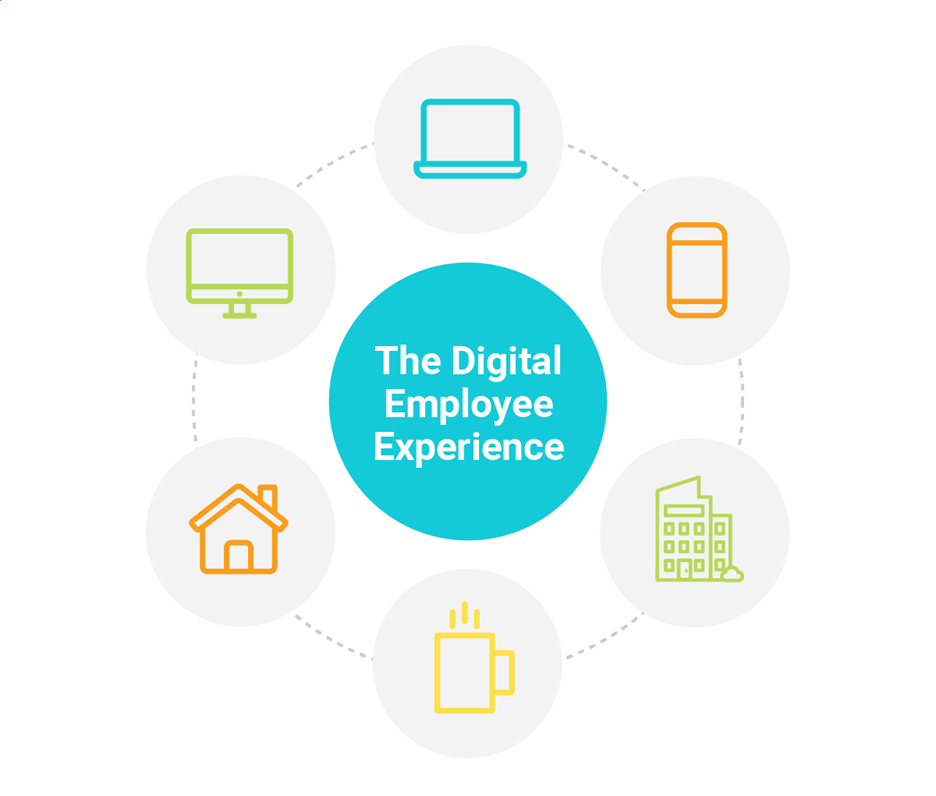
These questions sit at the heart of the Digital Employee Experience (DEX).
As organizations become more distributed, technology has become deeply connected to the employee experience. A slow application, confusing workflow or fragmented set of tools can create friction throughout the working day. Multiply that friction across hundreds or thousands of employees and the business impact becomes difficult to ignore.
This is driving the rise of Digital Employee Experience Platforms, which bring together employee-facing technology, workflows, support, insights and automation to create a more connected digital workplace.
For business and technology leaders, however, the opportunity is bigger than simply improving employee satisfaction.
A strong digital employee experience can influence productivity, employee adoption, IT efficiency, collaboration and ultimately the organization’s ability to execute.
The challenge is knowing where to start.
What Is a Digital Employee Experience Platform?
A Digital Employee Experience Platform is designed to help organizations understand and improve how employees interact with workplace technology.
Traditional IT management often focuses on whether systems are available.
DEX takes a broader view.
It asks:
- How easy is it for employees to use workplace applications?
- Where are employees experiencing friction?
- Which tools are creating productivity issues?
- Are employees actually using the technology the company provides?
- How quickly can IT identify and resolve recurring problems?
- Which processes can be simplified or automated?
This distinction matters.
A system can be technically operational while still creating a poor employee experience.
For example, an HR application may be functioning normally, but if employees need seven clicks and two separate logins to complete a basic task, the experience is still inefficient.
A Digital Employee Experience Platform aims to identify these gaps and help organizations address them.
Why Digital Employee Experience Matters More Than Ever
Workplace technology has expanded dramatically.
Employees may use dozens of applications every week, including communication platforms, CRM systems, project management tools, HR software, productivity applications, security tools and industry-specific systems.
The result is often technology overload.
Instead of making work easier, adding more tools can create more complexity.
The hidden cost of digital friction
Consider a sales employee who starts the morning by checking email, switching to the CRM, opening a customer support platform, reviewing a project tool and then searching a shared knowledge base for product information.
None of these systems is necessarily bad.
The problem is the experience between them.
Every switch creates a small amount of friction.
Employees may have to remember different passwords, search for information in multiple places or manually move information between systems.
One interruption might seem insignificant.
Hundreds of interruptions every year are not.
For large organizations, these small inefficiencies can translate into thousands of hours of lost productivity.
Digital Employee Experience Is Not Just an IT Issue
One common mistake is treating DEX as an IT-only initiative.
IT certainly plays a central role because it owns many of the systems employees rely on.
But the employee experience cuts across the entire organization.
HR owns important employee processes.
Finance owns expense and reimbursement workflows.
Marketing owns many collaboration and content systems.
Sales depends on CRM and customer-facing technology.
Operations depends on workflow and productivity tools.
This means improving DEX often requires collaboration between IT, HR and business leaders.
The goal is not simply to make technology easier to manage.
It is to make work easier to perform.
The Shift From IT Support to Proactive Experience Management
Traditional IT support is often reactive.
An employee experiences a problem.
They submit a ticket.
IT investigates.
The issue gets resolved.
This model remains necessary, but it has an obvious limitation.
It depends on employees reporting problems.
Modern Digital Employee Experience Platforms aim to identify issues before they become widespread complaints.
For example, a DEX platform may detect that a particular application is consistently taking longer to load for a specific group of employees.
Employees may not submit tickets because the application eventually works.
But the organization can still be losing productivity every day.
Proactive monitoring can reveal the problem before frustration becomes visible through support tickets or employee surveys.
That changes the role of IT from reactive troubleshooting to proactive experience management.
The Most Important Capabilities of Digital Employee Experience Platforms
Not every DEX platform offers exactly the same capabilities, but several areas are becoming increasingly important.
1. Digital experience monitoring
Experience monitoring helps organizations understand how workplace technology performs from the employee’s perspective.
Instead of asking only whether an application is technically available, organizations can examine factors such as:
- Application performance
- Device performance
- Network conditions
- Login issues
- System responsiveness
- Application crashes
- Error patterns
This gives IT a more complete view of the employee’s digital environment.
2. Employee sentiment and feedback
Performance data tells you what technology is doing.
Employee feedback helps explain how people experience it.
A platform may show that an application has a low error rate.
Employees may still find it confusing or difficult to use.
Combining technical signals with employee feedback creates a more complete picture.
This is particularly important when organizations introduce new technology.
A successful rollout is not simply one where the software is installed.
It is one where employees understand it, adopt it and use it effectively.
3. Automation
Automation is one of the most valuable capabilities in a modern DEX strategy.
Routine employee requests can consume significant amounts of IT time.
Password assistance, software access, device setup and common troubleshooting tasks are examples of processes that can often be automated.
The objective is not automation for its own sake.
It is reducing unnecessary effort for both employees and IT teams.
4. Self-service
Employees increasingly expect workplace technology to work like the digital services they use outside work.
They want quick answers.
They want simple interfaces.
They want to solve straightforward problems without waiting for someone else.
A well-designed self-service experience can help employees resolve common issues while allowing IT teams to focus on more complex problems.
5. Analytics and insights
A Digital Employee Experience Platform should help leaders understand patterns rather than simply collect information.
Useful questions include:
- Which teams experience the most technology friction?
- Which applications generate the most support issues?
- Where is employee adoption falling?
- Which devices create recurring problems?
- Did the latest software rollout improve or worsen the experience?
- Which problems are isolated and which are systemic?
These insights help organizations prioritize improvements.
A Mini Case: When “Working” Is Not Good Enough
Imagine a technology company with 2,000 employees.
Its collaboration platform is technically available 99.9% of the time.
From an infrastructure perspective, that looks excellent.
But a DEX analysis reveals something interesting.
Employees in three major regions experience slower performance during certain hours. The issue is not severe enough to trigger widespread support tickets, but employees are spending additional time waiting for pages to load and retrying actions.
The company estimates that each affected employee loses approximately five minutes per day.
Five minutes sounds insignificant.
Across hundreds of employees and hundreds of working days, it becomes a meaningful productivity problem.
The lesson is important:
Availability does not equal experience.
A system can be operational and still create friction.
How DEX Platforms Can Improve Employee Productivity
Productivity is often discussed in terms of individual performance.
But digital experience can influence productivity at a much more basic level.
When employees can find information quickly, access applications easily and complete routine processes without unnecessary steps, they have more time for meaningful work.
Consider a customer success manager.
If they need to open four applications to understand a customer’s current status, they spend time assembling information.
If those systems are connected and relevant information is surfaced in the workflow, they can spend more time solving the customer’s actual problem.
The technology has not necessarily made the employee work harder.
It has removed work that should not have existed in the first place.
DEX and Employee Experience Are Becoming Connected
There has historically been a separation between employee experience and technology experience.
That distinction is becoming less useful.
An employee may have an excellent manager and a strong team culture.
But if the systems they use every day are frustrating, the overall experience still suffers.
This is particularly relevant for hybrid and remote teams.
In a physical office, employees can sometimes overcome technology friction by asking someone nearby for help.
Remote employees have fewer informal opportunities to do that.
The digital workplace therefore becomes a larger part of the employee experience.
The Role of AI in Digital Employee Experience
AI is increasingly being incorporated into DEX strategies, but organizations should be careful about using AI simply because it is available.
The strongest applications are practical.
AI can help identify unusual patterns, summarize recurring support issues, recommend troubleshooting actions or help employees find answers using natural language.
For example, instead of searching through a knowledge base for instructions, an employee might ask:
“Why can’t I access the finance application?”
An AI assistant could guide the employee through relevant troubleshooting steps or direct them to the appropriate support process.
On the IT side, AI could identify that similar access problems are affecting a particular employee group and suggest a broader investigation.
This creates a shift from individual problem resolution toward pattern recognition.
The Business Case for Digital Employee Experience Platforms
The business case for DEX should go beyond employee satisfaction.
Organizations should consider several measurable outcomes.
Productivity
How much time are employees losing because of slow applications, system interruptions or inefficient workflows?
IT efficiency
How many support requests can be prevented, automated or resolved through self-service?
Technology adoption
Are employees using the tools the organization has invested in?
Employee retention
Does recurring technology frustration contribute to dissatisfaction or employee turnover?
Operational consistency
Can employees access the same quality of digital experience regardless of location or device?
These metrics make DEX easier to connect to business priorities.
How to Build a Strong Digital Employee Experience Strategy
Organizations do not need to transform every aspect of the digital workplace at once.
A focused approach is usually more effective.
Step 1: Map the employee journey
Start by understanding the tools and processes employees use throughout a typical working day.
Look for:
- Repeated logins
- Manual data entry
- Application switching
- Slow systems
- Confusing workflows
- Frequent support requests
- Difficult approval processes
These are potential areas of digital friction.
Step 2: Identify high-impact problems
Not every technology issue deserves the same level of attention.
Prioritize problems based on:
Frequency: How often does the problem occur?
Reach: How many employees are affected?
Impact: How much time or productivity does it consume?
Business importance: Does it affect critical workflows?
A small problem affecting 2,000 employees may deserve more attention than a serious problem affecting five people.
Step 3: Establish baseline measurements
Before making changes, measure the current experience.
Useful metrics might include:
- Application performance
- Support ticket volume
- Resolution time
- Employee satisfaction
- Tool adoption
- Login failures
- Workflow completion time
Without a baseline, it becomes difficult to determine whether improvements actually worked.
Step 4: Fix friction before adding more technology
This is one of the most important principles of DEX.
Organizations often respond to a technology problem by buying another technology product.
Sometimes that is necessary.
Often it is not.
If employees are struggling because three systems perform the same task, the answer may be consolidation.
If employees cannot find information, the answer may be better information architecture.
If a workflow requires unnecessary approvals, the answer may be process redesign.
DEX should not become an excuse to add another layer of software.
Step 5: Continuously measure the experience
Digital employee experience is not a one-time project.
Applications change.
Employees change.
Work models change.
Business processes change.
New technology is introduced.
The experience therefore needs continuous monitoring and improvement.
Common Digital Employee Experience Mistakes
Mistake 1: Measuring technology instead of experience
System uptime is important.
It is not the whole experience.
Organizations should look at performance from the employee’s perspective.
Mistake 2: Buying a platform without a clear problem
A DEX platform should solve defined business problems.
Start with employee friction rather than vendor features.
Mistake 3: Ignoring employee feedback
Technical data can reveal what is happening.
Employees can often tell you why.
Use both.
Mistake 4: Treating adoption as completion
Installing a new application does not mean employees are using it effectively.
Technology adoption needs to be measured after implementation.
Mistake 5: Trying to optimize everything
A DEX program can quickly become too broad.
Focus on the employee journeys that have the greatest impact on business performance.
A Practical DEX Checklist
Before investing in a Digital Employee Experience Platform, ask:
- Do we know where employees experience the most digital friction?
- Can we measure application and device performance?
- Do we combine technical data with employee feedback?
- Which recurring IT issues can be automated?
- Can employees resolve simple issues through self-service?
- Are our most important workplace applications being adopted?
- Can we identify problems before employees submit tickets?
- Do we have clear baseline metrics?
- Are we measuring productivity impact?
- Do we have a process for continuously improving the experience?
If these questions cannot be answered, the organization may need to establish its DEX strategy before selecting a platform.
The Future of Digital Employee Experience
The digital workplace is becoming the workplace.
That means employee experience and technology experience will continue to converge.
The next generation of organizations will not simply ask whether employees have access to the right tools.
They will ask whether those tools help employees do their best work with less friction.
This will push DEX beyond monitoring and support.
We can expect greater use of AI, automation, predictive insights and personalized employee support. But the underlying principle will remain simple.
Technology should reduce unnecessary effort.
It should make information easier to find.
It should help people complete work rather than make them manage systems.
Final Thoughts
The rise of Digital Employee Experience Platforms reflects a broader change in how organizations think about workplace technology.
Technology is no longer just infrastructure running behind the scenes.
It is part of the employee’s daily working environment.
Every slow application, unnecessary login, confusing workflow and unresolved technical problem adds friction.
Individually, these problems may seem small.
Collectively, they shape how effectively an organization operates.
The companies that approach DEX strategically will not simply have happier employees or fewer IT tickets. They will build digital workplaces where technology supports the way people actually work.
The real measure of a digital workplace is not how much technology it contains.
It is how little friction employees experience while using it.



Leave a Reply