

Table of Contents
- Introduction
- What Is Cybersecurity Mesh Architecture?
- Why Traditional Enterprise Security Architectures Are Changing
- Core Principles of Cybersecurity Mesh Architecture
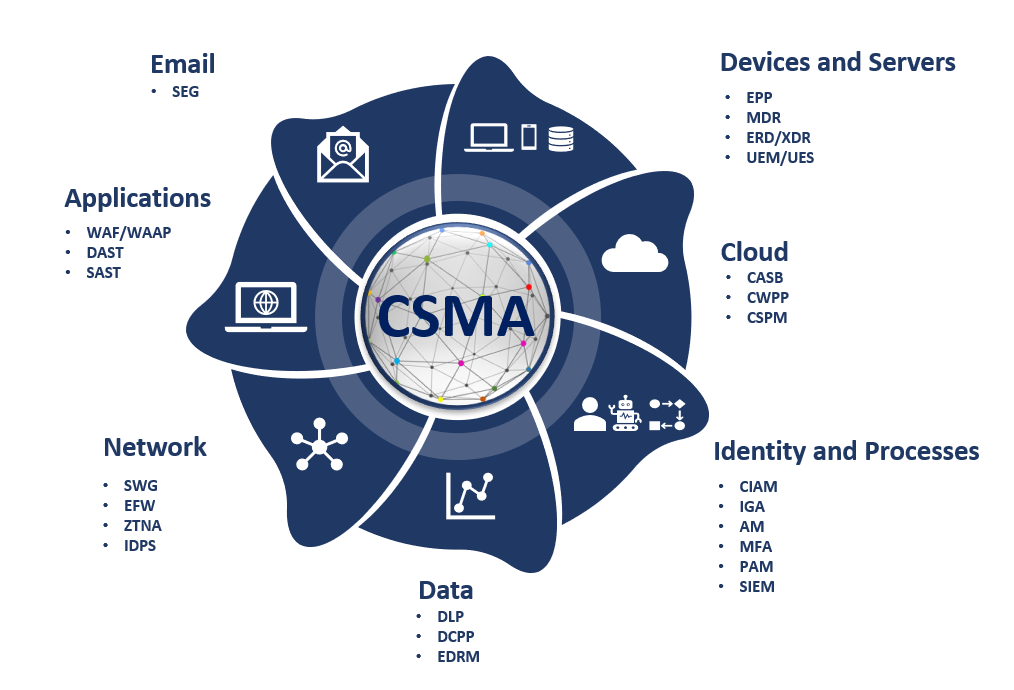
- Major Components of a Cybersecurity Mesh
- How Cybersecurity Mesh Architecture Supports Scalability
- Cybersecurity Mesh and Zero Trust
- Benefits of Cybersecurity Mesh Architecture
- How to Implement Cybersecurity Mesh Architecture
- Challenges of Cybersecurity Mesh Architecture
- Best Practices for a Successful Cybersecurity Mesh
- The Future of Cybersecurity Mesh Architecture
- Conclusion
Introduction
Modern enterprises no longer operate within a clearly defined security perimeter. Employees work remotely, applications run across multiple clouds, customers access digital services from anywhere, and sensitive information moves between data centers, SaaS platforms, mobile devices, APIs, and third-party systems.
This distributed environment has created a major challenge for cybersecurity teams: traditional security architectures were designed around centralized networks and fixed boundaries, while today’s organizations are decentralized by design.
Cybersecurity mesh architecture addresses this challenge by creating a flexible, distributed security framework in which security controls can operate across different environments while remaining connected through common policies, identity services, orchestration, and security intelligence.
Rather than forcing every application, device, and user through one central security layer, a cybersecurity mesh approach brings security capabilities closer to the assets they protect. It connects independently deployed security technologies into a coordinated ecosystem.
For large enterprises, this architecture can improve visibility, simplify security management, strengthen identity-based controls, and make it easier to scale protection as business infrastructure changes.
This article explores what cybersecurity mesh architecture is, why enterprises need it, its major components, benefits, implementation strategies, challenges, and best practices for building a scalable enterprise defense system.
What Is Cybersecurity Mesh Architecture?
Cybersecurity mesh architecture is a distributed cybersecurity approach that enables security controls to work together across different environments, applications, networks, users, and devices.
The fundamental idea is simple: instead of treating security as a single centralized perimeter, an organization creates a connected security ecosystem around individual assets and services.
A conventional enterprise security model might rely heavily on firewalls, centralized monitoring, endpoint protection, and network segmentation. These controls remain important, but they are not always sufficient when applications and users are distributed across multiple locations and infrastructure platforms.
Cybersecurity mesh architecture extends security capabilities across the organization’s digital environment.
For example, an enterprise may have:
- Identity and access management systems
- Cloud security platforms
- Endpoint detection and response tools
- Network security controls
- Application security solutions
- Security information and event management platforms
- Data security technologies
- Threat intelligence services
- Security orchestration and automation
- API security controls
- Vulnerability management platforms
A cybersecurity mesh connects these capabilities so that they can exchange information, enforce consistent policies, and support coordinated security decisions.
The architecture does not necessarily require an organization to replace every existing security product. Instead, it focuses on integration, interoperability, centralized policy management, distributed enforcement, and shared security intelligence.
Why Traditional Enterprise Security Architectures Are Changing
The traditional security perimeter was built around a relatively straightforward assumption: trusted users and systems were inside the corporate network, while potentially dangerous entities were outside it.
That assumption has become increasingly difficult to maintain.
Cloud computing has moved applications and infrastructure outside traditional data centers. Remote and hybrid work has dispersed employees across locations. Mobile devices have expanded the number of endpoints accessing corporate resources. APIs have created connections between internal and external services. Third-party suppliers and partners may also require access to business systems.
As a result, the enterprise perimeter has become increasingly fragmented.
Consider a typical modern business application. Its frontend might run in one cloud environment, backend services in another, data could be stored across several databases, authentication may be handled by a separate identity provider, and APIs could connect the application to dozens of external services.
Securing this environment through a single centralized security boundary is difficult.
Cybersecurity mesh architecture provides an alternative by distributing security capabilities while maintaining coordination.
Core Principles of Cybersecurity Mesh Architecture
A successful cybersecurity mesh architecture is not simply a collection of security products. It follows several architectural principles that allow security controls to operate as part of a coordinated system.
1. Distributed Security Controls
Security capabilities should be positioned where they are most effective.
An endpoint may require endpoint protection. A cloud workload may require cloud-native security controls. An API needs API-specific protection. A user needs identity and access controls.
Instead of forcing every security decision through a central location, the mesh distributes enforcement across the environment.
This can improve performance and make security more adaptable to different workloads.
2. Centralized Security Policy
Distributed controls still need consistent governance.
A cybersecurity mesh can use centralized policy management to establish organizational requirements while allowing individual security components to enforce those requirements within their environments.
For example, an enterprise may define a policy requiring multi-factor authentication for privileged access. Different identity systems and applications can enforce that policy according to their technical environments.
This creates a balance between centralized governance and decentralized enforcement.
3. Identity-Centric Security
Identity becomes particularly important in distributed architectures.
Security teams need to determine not only whether a connection originates from a known network, but also:
- Who is requesting access?
- What device are they using?
- What application are they accessing?
- What permissions do they have?
- Is the request consistent with normal behavior?
- What risk signals are associated with the session?
This supports a more granular security model in which access decisions are based on identity, context, risk, and authorization rather than network location alone.
4. Interoperability
A mesh depends on different security technologies being able to communicate.
Security products that operate as isolated silos can make it difficult to establish a complete picture of an attack.
Interoperability allows information from one security layer to influence decisions in another. For example, a suspicious endpoint event could trigger additional authentication requirements or restrict access to sensitive resources.
5. Shared Security Intelligence
A distributed security architecture becomes significantly more effective when security components share information.
Threat intelligence, identity signals, endpoint telemetry, network activity, vulnerability data, and cloud security events can collectively provide more context than any individual data source.
Security teams can use this shared intelligence to improve detection, investigation, and response.
Major Components of a Cybersecurity Mesh
Although implementations differ between organizations, several components commonly form the foundation of a cybersecurity mesh architecture.
Identity and Access Management
Identity and access management is a critical component because modern security increasingly depends on verifying users, devices, workloads, and services.
IAM systems can manage authentication, authorization, role-based access, privileged access, and lifecycle processes.
An enterprise mesh can integrate identity signals into broader security decisions. For example, a login from an unfamiliar device combined with unusual geographic behavior and access to sensitive data may result in additional verification.
Endpoint Security
Laptops, smartphones, servers, virtual machines, and other endpoints represent important security enforcement points.
Endpoint detection and response technologies can identify suspicious behavior, investigate potential compromises, and initiate containment actions.
Within a mesh architecture, endpoint information can be correlated with identity, network, application, and cloud telemetry.
Network Security
Network security remains essential even when organizations adopt distributed architectures.
Firewalls, secure access technologies, network detection systems, segmentation, and traffic inspection can help control communication between users, workloads, applications, and services.
The difference is that network controls become one part of a broader security ecosystem rather than the sole foundation of enterprise defense.
Cloud Security
Cloud environments introduce their own identities, configurations, workloads, APIs, storage systems, and network structures.
Cloud security capabilities can monitor configurations, identify vulnerabilities, detect suspicious activity, and enforce policies across cloud resources.
A cybersecurity mesh can connect cloud security information with enterprise identity and threat detection systems.
Security Information and Event Management
SIEM platforms aggregate security events from multiple systems and help security teams identify suspicious activity.
In a mesh architecture, SIEM capabilities can provide centralized visibility without requiring every security control to be physically centralized.
This distinction is important. Centralized visibility and distributed enforcement can coexist.
Security Orchestration and Automation
Security orchestration and automation can connect detection to response.
For example, when a high-confidence threat is detected, an automated workflow could:
- Identify the affected user or device.
- Retrieve related security telemetry.
- Validate the severity of the event.
- Disable or restrict access when appropriate.
- Isolate a compromised endpoint.
- Create an investigation record.
- Notify the security operations team.
- Initiate remediation procedures.
Automation reduces repetitive work and can accelerate incident response.
Data Security
Data is ultimately one of the primary assets organizations are trying to protect.
Data security capabilities can include classification, encryption, access controls, data loss prevention, monitoring, and governance.
Integrating data security into a cybersecurity mesh helps organizations apply controls based on the sensitivity and context of information.
How Cybersecurity Mesh Architecture Supports Scalability
Scalability is one of the strongest arguments for adopting a mesh approach.
Enterprise environments rarely remain static. Organizations acquire companies, launch applications, enter new markets, adopt new cloud platforms, and integrate new technologies.
A rigid security architecture can become increasingly difficult to maintain as the environment expands.
Cybersecurity mesh architecture can support scalability in several ways.
Scaling Across Multiple Clouds
Organizations may use multiple cloud providers for resilience, specialized services, regulatory requirements, or business strategy.
A mesh can provide a consistent security framework across these environments while allowing cloud-specific security controls to operate locally.
Supporting Remote and Hybrid Work
When employees work from different locations, security controls must follow users rather than depend entirely on a corporate office network.
Identity, endpoint, device posture, and access controls can provide security wherever employees connect.
Integrating New Applications
A well-designed mesh allows new applications and services to connect to existing security capabilities through standardized interfaces and policies.
This can reduce the need to build a completely separate security architecture for every new business application.
Supporting Mergers and Acquisitions
Mergers and acquisitions often result in multiple security environments being brought together.
A mesh-based approach can provide a path toward integration without requiring every security technology to be replaced immediately.
Security teams can prioritize common identity, policy, telemetry, and response capabilities while gradually rationalizing overlapping tools.
Cybersecurity Mesh and Zero Trust
Cybersecurity mesh architecture and zero trust are closely related, but they are not identical.
Zero trust is a security strategy based on continuously evaluating access rather than automatically trusting users or systems based on network location.
Cybersecurity mesh architecture provides an architectural model that can help implement those principles across distributed environments.
For example, zero-trust policies may require organizations to verify identity, assess device posture, enforce least privilege, and continuously evaluate access.
A cybersecurity mesh can connect the technologies required to enforce these policies across endpoints, applications, cloud infrastructure, networks, and identities.
The two approaches therefore complement each other.
Benefits of Cybersecurity Mesh Architecture
Improved Visibility
A connected security ecosystem can provide a more complete view of enterprise activity.
Instead of investigating identity events, endpoint alerts, network logs, and cloud activity separately, security teams can correlate these signals.
Faster Incident Response
Integrated security systems can reduce the time between detection and response.
Automated workflows can perform predefined actions while security analysts investigate complex incidents.
Better Security Consistency
Centralized policies can help organizations maintain consistent security requirements across distributed environments.
This is particularly valuable for enterprises operating across multiple regions, business units, cloud platforms, and applications.
Reduced Security Silos
Security teams often operate dozens of specialized technologies. If these systems do not communicate, analysts may have to manually collect information from multiple consoles.
A mesh reduces these silos by connecting security capabilities.
Greater Flexibility
Organizations can adopt new security technologies without necessarily redesigning their entire architecture.
A modular approach can make the security environment more adaptable to changing business requirements.
More Efficient Security Operations
Integration and automation can reduce repetitive manual tasks.
Security analysts can spend more time investigating complex threats and improving defensive strategies rather than continuously moving information between disconnected systems.
How to Implement Cybersecurity Mesh Architecture
Implementing a cybersecurity mesh should be treated as an architectural transformation rather than a simple technology deployment.
Step 1: Map the Enterprise Environment
Start by identifying critical:
- Applications
- Users
- Devices
- Workloads
- Data stores
- APIs
- Cloud environments
- Network connections
- Third-party integrations
- Identity systems
The goal is to understand how assets interact and where security controls currently exist.
Step 2: Identify Security Gaps
Evaluate existing security capabilities.
Ask questions such as:
- Where is visibility limited?
- Which systems operate as isolated silos?
- Where are policies inconsistent?
- Which security processes remain manual?
- Where are access controls too broad?
- Which critical assets lack adequate monitoring?
- Which tools generate overlapping alerts?
This assessment helps establish priorities.
Step 3: Establish an Identity Foundation
Identity should be treated as a strategic security layer.
Implement strong authentication, appropriate authorization, least-privilege access, privileged access controls, and reliable identity lifecycle management.
Make sure identities can be consistently associated with users, devices, workloads, and services where appropriate.
Step 4: Define Security Policies
Create policies that apply across environments.
Policies should address areas such as:
- Authentication
- Authorization
- Data access
- Device security
- Privileged accounts
- Network access
- Cloud configurations
- Incident response
- Logging and monitoring
Policies should be specific enough to enforce but flexible enough to accommodate different technologies.
Step 5: Connect Security Telemetry
Integrate security data sources so relevant events can be correlated.
Common sources include identity platforms, endpoint systems, cloud infrastructure, network devices, applications, vulnerability scanners, and security tools.
Prioritize high-value telemetry rather than attempting to ingest every possible event without a clear purpose.
Step 6: Automate High-Value Responses
Automation should begin with predictable, well-understood workflows.
Examples include automatically:
- Revoking compromised credentials
- Isolating known malicious endpoints
- Blocking confirmed malicious indicators
- Escalating high-severity incidents
- Opening investigation cases
- Applying additional authentication requirements
Human oversight should remain available for high-impact decisions.
Step 7: Measure and Improve
Security architecture should evolve continuously.
Track metrics such as:
- Mean time to detect
- Mean time to respond
- Incident containment time
- Identity-related security incidents
- Policy violations
- Vulnerability remediation time
- False-positive rates
- Security tool utilization
- Coverage of critical assets
These measurements can identify weaknesses and demonstrate whether the architecture is producing meaningful security improvements.
Challenges of Cybersecurity Mesh Architecture
Despite its advantages, implementing a cybersecurity mesh can introduce significant challenges.
Integration Complexity
Connecting security products from different vendors can be technically difficult.
Organizations may encounter incompatible data formats, APIs, authentication mechanisms, policy models, and integration capabilities.
Tool Sprawl
A mesh should not become an excuse to purchase more security products.
If an organization continues adding specialized tools without rationalizing existing technologies, the result can be even greater complexity.
Security leaders should focus on capabilities and outcomes rather than simply increasing the number of tools.
Data Overload
More telemetry does not automatically produce better security.
Security teams can become overwhelmed by excessive alerts and low-value events.
Effective architectures prioritize relevant signals and use correlation, analytics, and automation to improve signal quality.
Governance
Distributed security requires strong governance.
Organizations need clear ownership for policies, integrations, security controls, incident response, and data management.
Without governance, different business units may implement inconsistent controls.
Legacy Systems
Large enterprises often depend on older applications that were not designed for modern identity, API, or security integration.
Replacing these systems may be expensive or impractical.
A practical mesh strategy should support gradual modernization.
Skills Requirements
Cybersecurity mesh architecture requires expertise across security operations, cloud, identity, networking, application security, data security, and automation.
Organizations may need to invest in training or restructure security teams to support the new operating model.
Best Practices for a Successful Cybersecurity Mesh
Organizations can improve the results of a cybersecurity mesh initiative by following several best practices.
Start With Business Risk
Do not begin with technology.
Identify the organization’s most important assets, business processes, regulatory requirements, and threat scenarios. Then determine which architectural capabilities are needed to reduce those risks.
Adopt an API-First Mindset
Integration is fundamental to a mesh architecture.
Security platforms should expose reliable APIs and support common standards where possible. This makes it easier to exchange data and automate workflows.
Use Open Standards Where Practical
Open standards can reduce dependency on proprietary integrations and make the architecture easier to evolve.
Standards should be selected according to practical interoperability requirements rather than adopted simply for their own sake.
Prioritize Identity
Identity provides an important common layer across users, applications, devices, and workloads.
Strong identity governance can significantly improve access control in distributed environments.
Design for Failure
Security systems can fail, integrations can break, and cloud services can become unavailable.
Architectures should therefore include redundancy, graceful degradation, monitoring, and recovery mechanisms.
Minimize Excessive Centralization
Centralized management can be valuable, but not every security function needs to be centralized.
Keep enforcement close to the resource when doing so improves performance, resilience, or contextual decision-making.
Build Incrementally
A cybersecurity mesh does not need to be implemented all at once.
Organizations can begin with high-value use cases such as identity integration, endpoint visibility, cloud monitoring, or automated incident response.
Once those capabilities are mature, additional security domains can be connected.
The Future of Cybersecurity Mesh Architecture
Enterprise infrastructure will continue becoming more distributed.
Cloud-native applications, software-as-a-service platforms, edge computing, APIs, automation, remote work, and connected devices will increase the number of systems that security teams must protect.
At the same time, artificial intelligence and machine learning will increase the volume and sophistication of both attacks and defensive capabilities.
This environment makes coordination increasingly important.
Future cybersecurity mesh implementations are likely to place greater emphasis on automated decision-making, behavioral analytics, identity intelligence, continuous risk assessment, security orchestration, and machine-readable policies.
Security platforms may increasingly operate as interconnected services rather than isolated products.
The objective, however, will remain the same: provide effective protection without slowing down the business.
Conclusion
Cybersecurity mesh architecture represents a shift from perimeter-focused security toward a distributed and interconnected defense model.
Modern enterprises need security controls that can operate across cloud platforms, applications, endpoints, identities, networks, data stores, and third-party services. A centralized perimeter alone cannot provide sufficient visibility or flexibility for this environment.
By connecting distributed security controls through common policies, identity services, telemetry, automation, and intelligence, organizations can create a more adaptable security ecosystem.
The most successful implementations will not be defined by the number of security tools deployed. They will be defined by how effectively those tools work together.
For enterprise security leaders, the journey should begin with understanding business risk, mapping critical assets, strengthening identity, reducing security silos, improving interoperability, and automating high-value response processes.
Ultimately, cybersecurity mesh architecture is about building security that can move and scale with the organization. As enterprise environments become more distributed, a connected, flexible, and identity-aware security architecture can provide the foundation needed to defend digital operations without creating unnecessary complexity.





Leave a Reply