

Table of Contents
- Introduction
- What Is Secure Access Service Edge (SASE)?
- Why Traditional Security Models Are No Longer Enough
- Core Components of a SASE Architecture
- How SASE Works
- Key Benefits of Secure Access Service Edge
- SASE vs Traditional Network Security
- Common Use Cases for SASE
- Challenges of Implementing SASE
- Best Practices for SASE Adoption
- Future Trends in SASE
- Why SASE Is the Future of Unified Security Architecture
- Conclusion
Introduction
The modern workplace has undergone a dramatic transformation. Employees now work from corporate offices, homes, co-working spaces, and while traveling. Organizations have embraced cloud computing, Software-as-a-Service (SaaS) applications, hybrid work models, and distributed IT infrastructures to improve agility and scalability. However, this evolution has also expanded the cyberattack surface, making traditional perimeter-based security models increasingly ineffective.
Legacy security architectures were designed for a time when users, applications, and data resided within a centralized corporate network. Today, applications are hosted across multiple cloud environments, employees access resources from anywhere, and sensitive business data moves across numerous devices and networks. As a result, enterprises need a security framework that protects users and data regardless of location.
This is where Secure Access Service Edge (SASE) has emerged as a game-changing approach. By converging networking and security into a cloud-delivered architecture, SASE enables organizations to provide secure, reliable, and seamless access to applications and resources from any location. It combines multiple security capabilities with advanced networking technologies into a single integrated platform.
In this comprehensive guide, we’ll explore what Secure Access Service Edge is, how it works, its core components, benefits, implementation strategies, challenges, and why it is shaping the future of unified security architecture.
What Is Secure Access Service Edge (SASE)?
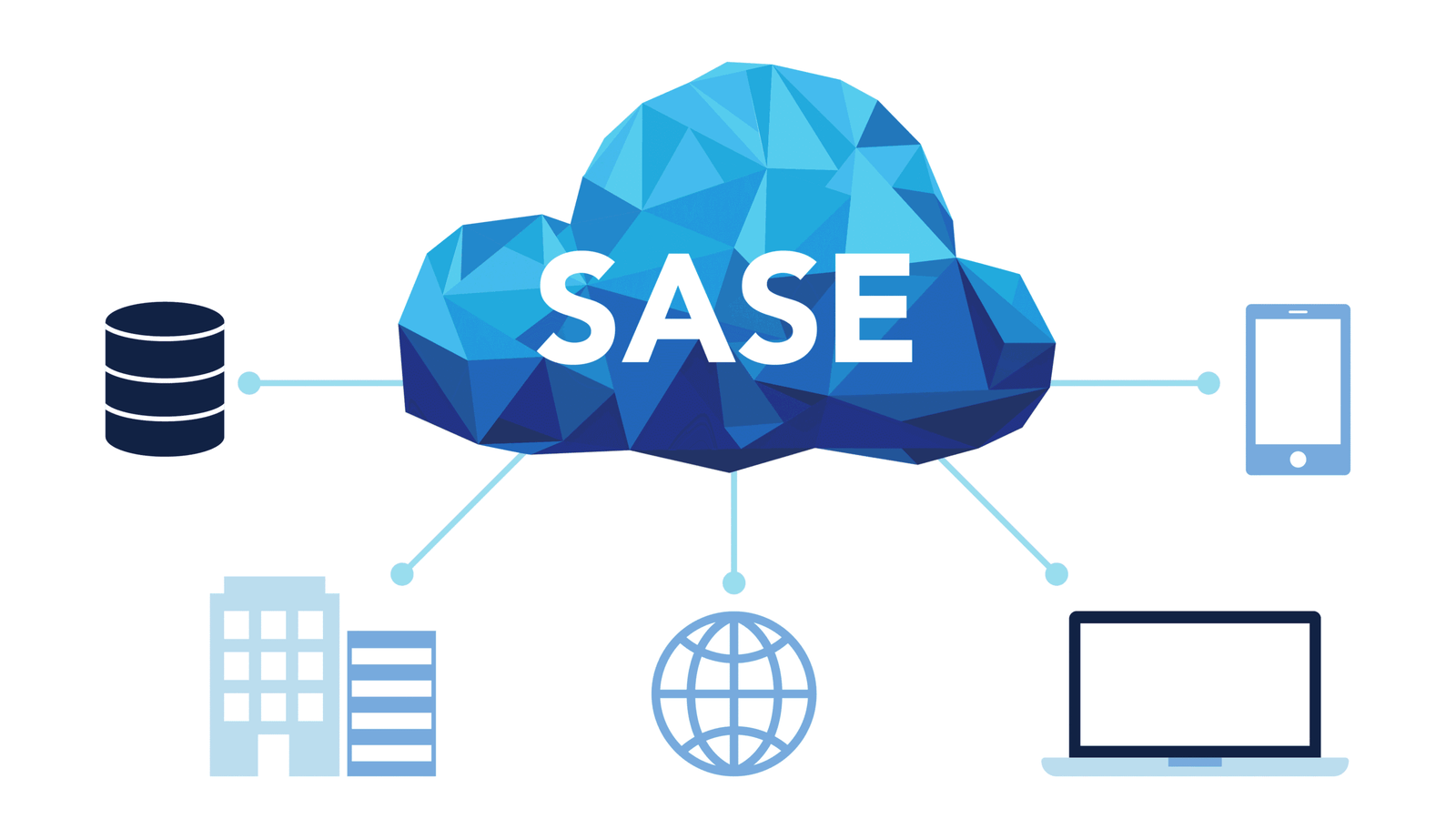
Secure Access Service Edge (SASE), pronounced “sassy,” is a cloud-native architecture that combines wide-area networking (WAN) capabilities with comprehensive network security services into a unified platform.
Rather than relying on separate networking and security products, SASE delivers both through the cloud, enabling secure access to applications, data, and services regardless of user location.
Its primary objectives include:
- Secure remote access
- Simplified network management
- Zero Trust security
- Improved application performance
- Reduced infrastructure complexity
- Consistent policy enforcement
- Scalable cloud security
SASE is particularly valuable for organizations with hybrid workforces, multiple branch offices, cloud-first strategies, and globally distributed operations.
Why Traditional Security Models Are No Longer Enough
Traditional enterprise security relied heavily on a centralized network perimeter protected by firewalls and VPNs. Once users connected to the corporate network, they often had broad access to internal resources.
Today’s IT environments are very different.
Organizations now face challenges such as:
- Hybrid and remote workforces
- Cloud-native applications
- Multi-cloud deployments
- Bring Your Own Device (BYOD)
- Internet of Things (IoT) devices
- Sophisticated cyber threats
- Increasing regulatory requirements
These changes have made legacy security architectures difficult to manage and less effective.
SASE addresses these challenges by shifting security closer to users, devices, and applications instead of relying on a fixed network perimeter.
Core Components of a SASE Architecture
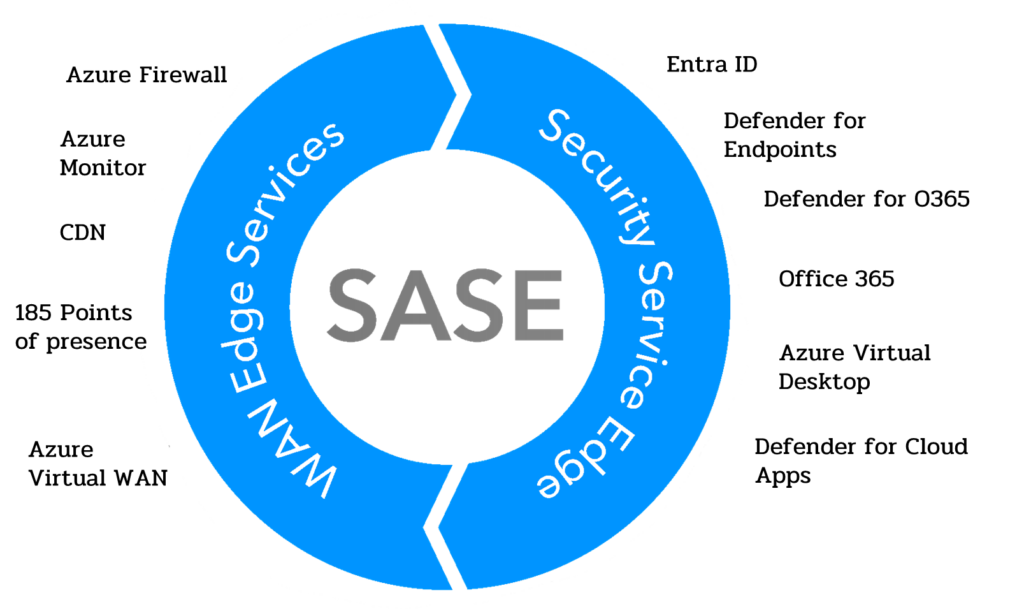
SASE integrates multiple networking and security functions into a unified service.
Software-Defined Wide Area Network (SD-WAN)
SD-WAN optimizes network connectivity across branch offices, cloud services, and remote users.
Benefits include:
- Intelligent traffic routing
- Improved application performance
- Lower WAN costs
- Centralized network management
- High availability
Zero Trust Network Access (ZTNA)
ZTNA replaces traditional VPNs by granting access based on identity, device health, and context rather than network location.
Key principles include:
- Verify every user
- Authenticate every device
- Least-privilege access
- Continuous monitoring
- Session-based authorization
Secure Web Gateway (SWG)
A Secure Web Gateway protects users from internet-based threats.
Functions include:
- URL filtering
- Malware detection
- Content inspection
- Web traffic monitoring
- Acceptable use policy enforcement
Cloud Access Security Broker (CASB)
CASB provides visibility and control over cloud application usage.
Capabilities include:
- SaaS security
- Data loss prevention
- Shadow IT discovery
- User activity monitoring
- Compliance reporting
Firewall as a Service (FWaaS)
FWaaS delivers enterprise-grade firewall protection through the cloud.
Features include:
- Intrusion prevention
- Threat detection
- Traffic inspection
- Application control
- Advanced filtering
Data Loss Prevention (DLP)
DLP protects sensitive information from unauthorized access or accidental exposure.
It helps organizations secure:
- Customer data
- Financial records
- Intellectual property
- Healthcare information
- Confidential documents
How SASE Works
SASE routes user traffic through a globally distributed cloud platform where networking and security services are applied before granting access to applications.
The process typically follows these steps:
- A user requests access to an application.
- The platform verifies user identity and device posture.
- Security policies are evaluated.
- Traffic is inspected for threats.
- Access is granted based on Zero Trust principles.
- Network traffic is optimized for performance.
- Continuous monitoring ensures ongoing compliance and security.
This unified approach provides secure access without sacrificing user experience.
Key Benefits of Secure Access Service Edge
1. Enhanced Security
SASE applies consistent security policies across users, devices, applications, and locations.
Organizations benefit from:
- Reduced attack surface
- Continuous threat monitoring
- Strong identity verification
- Consistent policy enforcement
2. Simplified IT Infrastructure
Instead of deploying multiple standalone security appliances, businesses manage networking and security through a single cloud platform.
Benefits include:
- Reduced hardware requirements
- Lower maintenance costs
- Centralized management
- Easier policy administration
3. Better Support for Hybrid Work
Employees can securely access applications from any location without relying on traditional VPNs.
This improves both productivity and security.
4. Improved Application Performance
SASE intelligently routes traffic using optimized network paths.
Benefits include:
- Lower latency
- Faster cloud application access
- Better user experience
- Improved reliability
5. Reduced Operational Costs
Organizations can reduce expenses related to:
- On-premises security appliances
- MPLS networks
- VPN infrastructure
- Hardware maintenance
Cloud-delivered services also simplify scaling as business needs evolve.
6. Stronger Compliance
Centralized security policies help organizations comply with regulations such as:
- GDPR
- HIPAA
- PCI DSS
- ISO 27001
- SOC 2
Unified logging and reporting simplify audits.
7. Scalability
SASE platforms can scale to support:
- Global offices
- Remote workers
- Cloud applications
- Business acquisitions
- Seasonal demand
Organizations can expand security coverage without significant infrastructure investments.
SASE vs Traditional Network Security
| Traditional Security | SASE Architecture |
|---|---|
| Perimeter-based | Identity-based |
| Hardware appliances | Cloud-delivered services |
| VPN-centric access | Zero Trust access |
| Separate security tools | Unified security platform |
| Complex management | Centralized administration |
| Limited scalability | Highly scalable |
| Location-dependent | Access from anywhere |
Common Use Cases for SASE
Hybrid Workforce Security
Organizations secure employees working from offices, homes, and mobile environments while maintaining a consistent user experience.
Multi-Cloud Environments
Businesses can enforce uniform security policies across public, private, and hybrid cloud platforms.
Branch Office Connectivity
SASE replaces expensive WAN architectures with cloud-based networking that securely connects branch locations.
Third-Party Access
Organizations can grant secure, limited access to contractors, suppliers, and partners without exposing internal networks.
Secure SaaS Adoption
Employees increasingly use cloud-based productivity tools.
SASE protects these applications through CASB, SWG, and Zero Trust controls.
Challenges of Implementing SASE
Although SASE offers significant benefits, implementation requires careful planning.
Legacy Infrastructure Integration
Many organizations continue to rely on traditional firewalls, VPNs, and MPLS networks.
Migration should be gradual to minimize disruption.
Policy Standardization
Organizations often have inconsistent security policies across departments.
Standardizing policies is essential for effective SASE deployment.
User Identity Management
Strong identity governance is critical because SASE relies heavily on user authentication and authorization.
Organizations should integrate identity providers and enable multi-factor authentication.
Skills and Change Management
Successful adoption requires collaboration between networking, security, and IT operations teams.
Training and clear governance help ensure a smooth transition.
Best Practices for SASE Adoption
Organizations can maximize success by following these best practices:
Adopt a Zero Trust Mindset
Verify every access request based on identity, device posture, and context.
Assess Current Infrastructure
Evaluate networking, security tools, cloud usage, and remote access requirements before designing a SASE architecture.
Prioritize Identity and Access Management
Implement strong authentication, role-based access controls, and continuous identity verification.
Automate Security Policies
Use centralized management to automate policy enforcement across users, devices, and applications.
Monitor Continuously
Leverage real-time analytics and threat intelligence to identify suspicious activity and respond quickly to emerging threats.
Future Trends in SASE
Several trends are accelerating SASE adoption.
Artificial Intelligence
AI-powered threat detection improves incident response by identifying anomalies and automating security decisions.
Secure Edge Computing
As edge computing expands, SASE will provide consistent protection closer to users and devices.
IoT Security
Connected devices continue to grow across industries.
SASE will play an increasingly important role in securing IoT ecosystems.
Integrated Security Platforms
Organizations are moving away from fragmented security products toward unified platforms that simplify management and improve visibility.
Expansion of Zero Trust
Zero Trust principles will become the default security model for enterprises adopting cloud-first and hybrid work strategies.
Why SASE Is the Future of Unified Security Architecture
Modern enterprises require security that is flexible, scalable, and capable of protecting users wherever they work.
SASE addresses these requirements by combining networking and security into a single cloud-delivered framework.
Organizations that adopt SASE can achieve:
- Stronger cybersecurity
- Simplified network management
- Improved application performance
- Better user experience
- Reduced infrastructure costs
- Consistent policy enforcement
- Enhanced compliance
- Greater business agility
These capabilities make SASE a foundational technology for digital transformation.
Conclusion
Secure Access Service Edge (SASE) represents a fundamental shift in how enterprises approach networking and cybersecurity. As organizations embrace hybrid work, cloud computing, and distributed operations, traditional perimeter-based security models are no longer sufficient to protect users, applications, and sensitive data.
By unifying networking capabilities with cloud-delivered security services, SASE enables organizations to provide secure, high-performance access from anywhere while simplifying infrastructure and improving operational efficiency. Its integration of technologies such as SD-WAN, Zero Trust Network Access, Secure Web Gateway, Cloud Access Security Broker, Firewall as a Service, and Data Loss Prevention creates a comprehensive framework for modern enterprise security.
Although implementing SASE requires thoughtful planning, strong identity management, and organizational alignment, the long-term benefits are substantial. Businesses gain enhanced security, streamlined operations, better compliance, lower costs, and the flexibility to support evolving digital environments.
As cyber threats continue to grow in sophistication and workforces become increasingly distributed, Secure Access Service Edge is poised to become the foundation of unified security architecture. Organizations that adopt SASE today will be better equipped to protect their assets, enable innovation, and build a secure, resilient future.


Leave a Reply