

Table of Contents
- Introduction
- What Is a Security Data Lake?
- Why Traditional Security Data Management Falls Short
- How Security Data Lakes Work
- Benefits of Centralizing Threat Intelligence
- Security Data Lakes vs Traditional SIEM
- Key Components of a Security Data Lake
- Common Data Sources
- How Machine Learning Enhances Security Data Lakes
- Supporting Compliance Requirements
- Challenges of Implementing Security Data Lakes
- Best Practices for Building a Security Data Lake
- Real-World Use Cases
- The Future of Security Data Lakes
- Conclusion
Introduction
Modern organizations generate enormous amounts of security data every day. Firewalls, endpoint protection platforms, cloud services, identity systems, applications, network devices and third-party security tools continuously create logs, alerts and telemetry. While this data has tremendous value, it often remains scattered across disconnected platforms, making it difficult for security teams to gain a complete understanding of threats.
As cyberattacks become more sophisticated, organizations need more than isolated security tools. They need a centralized approach that enables analysts to collect, store, analyze and correlate data from every environment. This is where security data lakes have become an essential component of modern cybersecurity strategies.
A security data lake provides a centralized repository that stores structured, semi-structured and unstructured security information at scale. Rather than forcing organizations to decide what data to keep, a security data lake allows them to preserve vast amounts of telemetry for future analysis. This creates better visibility, accelerates investigations and improves threat detection.
In this article, we explore what security data lakes are, why they matter, how they improve threat intelligence and what organizations should consider when implementing one.
What Is a Security Data Lake?
A security data lake is a centralized storage platform designed to collect security-related information from multiple sources across an organization’s technology environment. Unlike traditional databases that require predefined schemas, security data lakes can ingest large volumes of diverse data without extensive transformation.
These repositories often include information from:
- Firewalls
- Endpoint Detection and Response (EDR) platforms
- Security Information and Event Management (SIEM) systems
- Cloud infrastructure
- Identity and access management systems
- Email security gateways
- Web application firewalls
- DNS logs
- Network traffic
- Threat intelligence feeds
- Vulnerability scanners
- SaaS applications
- Operating systems
- Authentication services
Instead of maintaining separate silos, organizations consolidate all security telemetry into one location where advanced analytics and machine learning tools can examine the complete dataset.
Why Traditional Security Data Management Falls Short
Many organizations still rely on multiple disconnected security products. Each platform stores its own logs and generates independent alerts.
This fragmented approach creates several challenges.
Limited Visibility
Analysts only see a portion of the attack chain. A phishing email may appear in one platform while endpoint activity appears elsewhere. Without correlation, important indicators remain hidden.
Slow Investigations
Security teams often spend more time locating data than investigating incidents. Analysts switch between dashboards, export logs and manually combine information.
Inconsistent Data Retention
Different tools maintain different retention policies. Some may store logs for only a few weeks while compliance regulations require data retention for several months or years.
Higher Costs
Maintaining multiple storage platforms increases infrastructure expenses. Organizations may also pay premium licensing fees simply to retain historical security data.
Missed Threats
Advanced attacks often span multiple systems. Without centralized analysis, subtle attack patterns can go unnoticed until significant damage has occurred.
How Security Data Lakes Work
A security data lake follows a structured process that transforms raw security information into actionable intelligence.
Data Collection
Information is gathered from numerous security technologies, cloud platforms and business applications. Modern ingestion pipelines support streaming data in real time while also accepting historical datasets.
Data Normalization
Since every security product uses different formats, normalization converts incoming information into consistent structures that support efficient searching and analysis.
Data Storage
Unlike traditional relational databases, security data lakes are optimized for large-scale storage. They accommodate petabytes of structured and unstructured information while maintaining accessibility.
Data Processing
Processing engines enrich incoming information with contextual details such as:
- User identities
- Device information
- Asset ownership
- Geolocation
- Threat intelligence indicators
- Vulnerability information
- Risk scores
Analytics
Security teams use search, dashboards, behavioral analytics and machine learning models to identify suspicious activity and emerging threats.
Benefits of Centralizing Threat Intelligence
Security data lakes provide several strategic advantages that significantly improve cybersecurity operations.
Complete Security Visibility
When all security data resides in one repository, analysts gain a holistic view of organizational activity.
Instead of examining isolated alerts, investigators can reconstruct entire attack timelines from initial access to lateral movement and data exfiltration.
Complete visibility also improves executive reporting by providing accurate metrics across the entire security environment.
Faster Threat Detection
Modern attackers move quickly.
A security data lake enables organizations to correlate indicators from multiple systems within seconds.
For example, analysts can identify situations where:
- A suspicious email was delivered.
- The recipient opened the attachment.
- PowerShell executed shortly afterward.
- Credentials were stolen.
- Administrative privileges increased.
- Sensitive files were accessed.
Without centralized analysis, these events may appear unrelated.
Improved Threat Hunting
Threat hunting requires searching historical security data for hidden attacker activity.
Security data lakes support advanced hunting because they retain large volumes of telemetry over extended periods.
Analysts can investigate:
- Command execution
- Network connections
- Authentication failures
- Registry changes
- Cloud API activity
- DNS requests
- File modifications
Historical searches often reveal compromised systems that traditional alerting missed.
Better Incident Response
During active incidents, every minute matters.
Security data lakes reduce investigation time by allowing responders to access all relevant information from one location.
Instead of requesting logs from multiple teams, investigators immediately begin analyzing attacker behavior.
This shortens:
- Detection time
- Investigation time
- Containment time
- Recovery time
Enhanced Threat Intelligence
External threat intelligence feeds become more valuable when combined with internal security data.
Organizations can automatically identify:
- Malicious IP addresses
- Known ransomware domains
- Command-and-control servers
- Malicious file hashes
- Compromised credentials
This contextual intelligence allows security teams to prioritize genuine threats instead of investigating every alert equally.
Long-Term Data Retention
Many regulatory frameworks require organizations to retain security logs.
A centralized data lake offers cost-effective long-term storage while preserving information for:
- Compliance audits
- Digital forensics
- Insider threat investigations
- Historical threat analysis
Long-term retention also helps organizations understand attacker behavior over months or years.
Security Data Lakes vs Traditional SIEM
Although security data lakes and SIEM platforms often work together, they serve different purposes.
| Security Data Lake | Traditional SIEM |
|---|---|
| Stores massive datasets | Focuses on active monitoring |
| Supports structured and unstructured data | Usually requires normalized log formats |
| Optimized for scalability | Optimized for alert generation |
| Lower storage costs | Higher costs for long-term retention |
| Enables advanced analytics | Primarily supports correlation rules |
| Supports machine learning workloads | Focuses on security operations |
Many organizations now use security data lakes as the primary storage platform while their SIEM analyzes selected datasets for real-time monitoring.
Key Components of a Security Data Lake
An effective implementation includes several foundational components.
Data Ingestion Layer
Responsible for collecting data from hundreds of sources through APIs, agents, streaming services and log collectors.
Storage Layer
Provides scalable storage capable of handling billions of daily events without performance degradation.
Processing Engine
Processes incoming information through parsing, enrichment, normalization and indexing.
Analytics Platform
Supports:
- Search
- Dashboards
- Threat detection
- Behavioral analytics
- Machine learning
- Statistical analysis
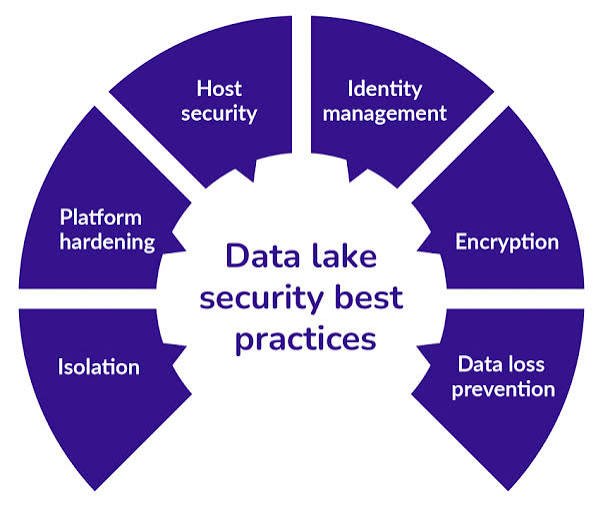
Security Controls
Since the data lake contains sensitive information, organizations must implement:
- Encryption
- Role-based access control
- Multi-factor authentication
- Audit logging
- Data masking
- Key management
Common Data Sources
Security data lakes become more valuable as additional data sources are integrated.
Typical sources include:
- Endpoint telemetry
- Cloud audit logs
- Identity providers
- VPN logs
- Firewall logs
- Network packet captures
- Email gateways
- Application logs
- Database audit logs
- DNS servers
- Container platforms
- Kubernetes clusters
- SaaS applications
- Vulnerability scanners
- Threat intelligence feeds
- Asset inventories
The broader the visibility, the stronger the detection capabilities.
How Machine Learning Enhances Security Data Lakes
Artificial intelligence and machine learning dramatically improve the effectiveness of centralized security data.
Machine learning models identify:
- Unusual login behavior
- Abnormal network traffic
- Insider threats
- Data exfiltration attempts
- Credential abuse
- Account compromise
- Malware activity
Instead of relying entirely on predefined rules, algorithms learn normal organizational behavior and identify deviations.
This significantly reduces the number of missed threats.
Supporting Compliance Requirements
Organizations operating in regulated industries benefit from centralized security data.
A security data lake helps demonstrate:
- Complete audit trails
- Log integrity
- Access monitoring
- Security event retention
- Incident documentation
- Regulatory reporting
Centralized reporting simplifies compliance with industry standards and government regulations.
Challenges of Implementing Security Data Lakes
Although highly beneficial, implementation requires careful planning.
Data Quality
Poor quality data reduces detection accuracy.
Organizations should validate incoming telemetry and remove duplicate information.
Integration Complexity
Legacy systems often require custom connectors.
A phased integration strategy minimizes disruption.
Access Management
Sensitive information must only be available to authorized users.
Granular permissions help protect confidential business data.
Storage Optimization
Although storage costs continue to decline, inefficient retention policies can increase expenses.
Organizations should classify data according to operational and compliance requirements.
Skilled Personnel
Security data lakes require professionals with expertise in:
- Cybersecurity
- Data engineering
- Cloud infrastructure
- Analytics
- Threat intelligence
Cross-functional collaboration improves implementation success.
Best Practices for Building a Security Data Lake
Organizations can maximize value by following proven practices.
Define Clear Objectives
Identify the specific security outcomes expected from the project.
Examples include:
- Faster incident response
- Improved threat hunting
- Better compliance
- Reduced storage costs
Prioritize High-Value Data
Begin with the most important telemetry before expanding to additional sources.
Standardize Data Formats
Consistent normalization improves correlation and analytics.
Automate Data Enrichment
Automatically add contextual information such as:
- User identities
- Device ownership
- Threat intelligence
- Asset criticality
Automation reduces analyst workload.
Secure the Data Lake
Protect the repository with:
- Encryption
- Least privilege access
- Continuous monitoring
- Backup strategies
- Immutable storage where appropriate
Continuously Optimize
Security environments constantly evolve.
Organizations should regularly review:
- Data sources
- Detection rules
- Storage policies
- Machine learning models
- Threat intelligence integrations
Continuous improvement ensures the platform remains effective.
Real-World Use Cases
Security data lakes support numerous cybersecurity operations.
Ransomware Investigation
Analysts correlate endpoint events, email activity, network traffic and authentication logs to identify the complete attack path.
Insider Threat Detection
Behavioral analytics identify unusual file access, privilege escalation and abnormal login patterns.
Cloud Security Monitoring
Organizations monitor activity across multiple cloud providers from one centralized platform.
Digital Forensics
Historical logs enable investigators to reconstruct attacker actions months after an incident.
Executive Reporting
Leadership receives comprehensive dashboards that summarize organizational security posture using centralized data.
The Future of Security Data Lakes
Security operations continue to evolve toward data-centric architectures.
Emerging trends include:
- AI-driven threat detection
- Automated incident response
- Predictive analytics
- Cross-cloud visibility
- Identity-centric security
- Extended Detection and Response (XDR) integration
- Real-time behavioral intelligence
As organizations adopt hybrid work environments, cloud-native applications and Internet of Things devices, security data volumes will continue growing rapidly.
Security data lakes provide the scalability needed to manage this expanding attack surface while enabling faster and more informed decision-making.
Organizations that invest in centralized security intelligence today will be better prepared for tomorrow’s increasingly sophisticated cyber threats.
Conclusion
Cybersecurity is no longer just about deploying more security tools. Success depends on connecting data across the entire digital environment and transforming that information into meaningful insights.
Security data lakes address one of the biggest challenges facing modern security teams by centralizing massive volumes of security telemetry into a single, scalable repository. This unified approach improves visibility, accelerates investigations, strengthens threat hunting and enhances overall incident response.
By integrating diverse data sources, enriching information with threat intelligence and applying advanced analytics, organizations can detect attacks earlier and respond with greater confidence. Security analysts spend less time searching for information and more time stopping threats before they escalate.
As cyber risks continue to evolve, security data lakes are becoming a foundational element of resilient security operations. Organizations that embrace centralized threat intelligence will be better positioned to protect critical assets, meet compliance obligations and make faster, smarter security decisions in an increasingly complex digital landscape.





Leave a Reply