

Table of Contents
- Introduction
- What is Decentralized Identity (DID)?
- How Decentralized Identity Works
- Why Enterprises Are Adopting Decentralized Identity
- Key Use Cases of DID in Enterprise Ecosystems
- DID vs Traditional Identity Systems
- Role of Blockchain in Decentralized Identity
- Benefits of Decentralized Identity in Enterprises
- Challenges in Adoption of DID
- Standards and Ecosystem Players
- Real-World Enterprise Applications
- DID and Zero Trust Architecture
- The Future of Decentralized Identity in Enterprises
- Conclusion
Introduction
Enterprises are rapidly moving toward a digital-first operating model where identity has become the new security perimeter. Traditional identity systems—centralized directories, password-based authentication, and siloed identity providers—are struggling to keep up with modern security, privacy, and scalability demands.
In response to these challenges, a new paradigm is emerging: decentralized identity (DID).
Decentralized identity in enterprise ecosystems is reshaping how organizations manage authentication, authorization, and trust. Instead of relying on a central authority to store and verify identity data, DID distributes identity control to users themselves through cryptographic verification methods.
This shift represents one of the most significant transformations in identity and access management (IAM) in decades.
What is Decentralized Identity (DID)?
Decentralized Identity (DID) is a framework that enables individuals, devices, and organizations to own and control their digital identities without depending on a centralized identity provider.
At its core, DID allows users to:
- Create identity identifiers independent of any central authority
- Store identity credentials securely in digital wallets
- Present verifiable credentials without exposing unnecessary personal data
Unlike traditional identity systems, DID uses blockchain or distributed ledger technology (DLT) to ensure trust, transparency, and tamper resistance.
How Decentralized Identity Works
The DID ecosystem typically consists of three key components:
1. Decentralized Identifiers (DIDs)
These are unique identifiers registered on a blockchain or distributed ledger. They act as a digital address for identity.
2. Verifiable Credentials (VCs)
These are digitally signed credentials issued by trusted entities (e.g., employers, universities, governments). They can be verified without contacting the issuer directly.
3. Digital Identity Wallets
Users store and manage their credentials in secure wallets, often controlled via mobile apps or enterprise platforms.
Workflow Example:
- Employer issues a verifiable credential to an employee
- Employee stores it in their identity wallet
- Employee presents credential to access enterprise systems
- System verifies credential using cryptographic proofs
- Access is granted without password-based authentication
Why Enterprises Are Adopting Decentralized Identity
Enterprises are under increasing pressure to secure identity systems while maintaining usability and compliance.
1. Enhanced Security
DID eliminates centralized identity databases, which are prime targets for attackers. Without a single point of failure, breach risks are significantly reduced.
2. User Privacy and Data Minimization
Users can share only necessary identity attributes instead of full profiles, aligning with privacy regulations.
3. Reduced Identity Fraud
Cryptographically verifiable credentials make it extremely difficult to forge identity documents or credentials.
4. Improved User Experience
Passwordless authentication reduces friction, login fatigue, and support costs related to password resets.
5. Regulatory Compliance
DID supports compliance with:
- GDPR (data minimization)
- HIPAA (secure health data access)
- eIDAS 2.0 (digital identity frameworks in Europe)
Key Use Cases of DID in Enterprise Ecosystems
1. Workforce Identity Management
Employees can use verifiable credentials for:
- Single sign-on (SSO)
- Internal application access
- Remote authentication
2. Partner and Vendor Access
Enterprises can verify external partners without creating long-lived accounts, reducing privilege sprawl.
3. Customer Identity Verification
DID enables secure onboarding for banking, fintech, and e-commerce platforms without storing sensitive data.
4. Cross-Organization Collaboration
Multiple enterprises can trust shared credentials without integrating identity systems.
5. IoT Device Identity
Devices can have unique decentralized identities, enabling secure machine-to-machine communication.
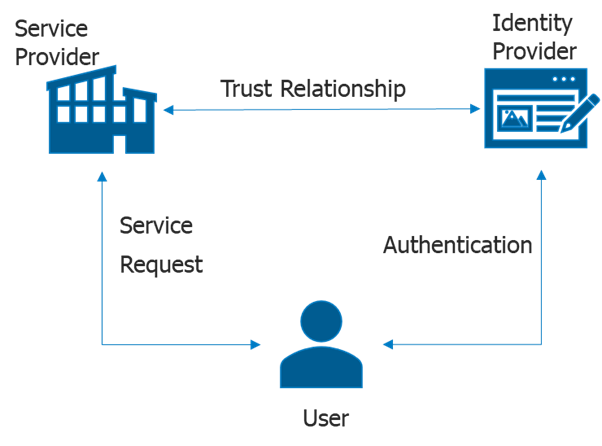
DID vs Traditional Identity Systems
| Feature | Traditional IAM | Decentralized Identity |
|---|---|---|
| Control | Central authority | User-controlled |
| Data storage | Centralized database | Distributed ledger + wallet |
| Security risk | Single point of failure | Reduced attack surface |
| Privacy | Full data exposure | Selective disclosure |
| Authentication | Passwords, tokens | Cryptographic proof |
| Portability | Limited | Highly portable |
Role of Blockchain in Decentralized Identity
Blockchain plays a foundational role in DID systems by providing:
- Immutable identity records
- Tamper-proof credential verification
- Decentralized trust without intermediaries
- Transparent auditability
However, not all DID implementations require public blockchains—some enterprises use permissioned distributed ledgers for scalability and compliance.
Benefits of Decentralized Identity in Enterprises
1. Eliminates Password Dependency
Passwordless authentication reduces phishing and credential theft risks.
2. Reduces Identity Silos
Employees no longer need separate credentials for every system.
3. Strengthens Zero Trust Architecture
DID aligns perfectly with Zero Trust security models, where identity is continuously verified.
4. Lowers Operational Costs
Fewer password resets, helpdesk tickets, and identity reconciliation efforts.
5. Enables Scalable Identity Ecosystems
Organizations can onboard users, partners, and devices seamlessly.
Challenges in Adoption of DID
Despite its benefits, DID adoption in enterprise ecosystems is not without challenges.
1. Lack of Standardization
Multiple DID frameworks exist, and interoperability is still evolving.
2. Integration Complexity
Legacy IAM systems are not designed for decentralized identity models.
3. Regulatory Uncertainty
Legal recognition of decentralized credentials varies across regions.
4. User Experience Barriers
Digital wallets and cryptographic concepts may be difficult for non-technical users.
5. Key Management Risks
If users lose access to their private keys, identity recovery becomes complex.
Standards and Ecosystem Players
The DID ecosystem is evolving with contributions from several organizations and standards bodies:
- W3C Decentralized Identifier (DID) Standards
- Verifiable Credentials Data Model
- Identity foundations and open-source projects
- Enterprise IAM vendors integrating DID support
These standards aim to ensure interoperability across platforms and industries.
Real-World Enterprise Applications
Financial Services
Banks use DID for secure customer onboarding and fraud prevention.
Healthcare
Patients can control access to medical records using verifiable credentials.
Education
Universities issue digital diplomas that can be verified globally.
Government Services
Digital identity systems enable secure access to public services.
Supply Chain
Organizations verify supplier identities and certifications without manual checks.
DID and Zero Trust Architecture
Decentralized identity strengthens Zero Trust security by ensuring:
- Continuous identity verification
- No implicit trust based on network location
- Fine-grained access control
- Cryptographic authentication
This makes DID a natural extension of modern enterprise security frameworks.
The Future of Decentralized Identity in Enterprises
The future of DID is moving toward:
1. Passwordless Enterprise Ecosystems
Passwords will be replaced by cryptographic credentials.
2. Interoperable Identity Networks
Users will carry identities across organizations and platforms.
3. AI-Driven Identity Verification
Machine learning will detect anomalies in credential usage.
4. Fully Self-Sovereign Identity Models
Users will have complete control over identity data.
5. Integration with Digital Nations
Governments may adopt DID for national digital identity systems.
Conclusion
Decentralized identity in enterprise ecosystems represents a fundamental shift in how digital trust is established and managed. By moving away from centralized identity stores and toward user-controlled, cryptographically secured credentials, organizations can significantly improve security, privacy, and operational efficiency.
While challenges around adoption, standardization, and integration remain, the trajectory is clear: decentralized identity is becoming a cornerstone of modern digital infrastructure.
Enterprises that begin adopting DID early will be better positioned to build secure, scalable, and privacy-preserving identity ecosystems for the future.




Leave a Reply