


Table of Contents
- The Limits of Traditional Productivity Tools
- Collaboration Is Becoming More Intelligent
- From Communication to Context
- The Rise of Asynchronous Collaboration
- Enterprise Knowledge Is Becoming a Strategic Asset
- Collaboration Between People and AI
- From AI Assistants to AI Agents
- Connected Collaboration Across Enterprise Systems
- Reducing Application Switching
- Personalization Will Become More Important
- Collaboration Will Become More Proactive
- The Importance of Human Oversight
- Security and Data Governance
- Measuring the New Definition of Productivity
- The Workplace Is Becoming a Collaborative Network
- What Businesses Should Do Now
- Conclusion: Collaboration Is Becoming Intelligent Infrastructure
For decades, enterprise collaboration has revolved around a familiar collection of productivity tools.
Employees send emails, attend meetings, exchange documents, update spreadsheets and communicate through workplace messaging platforms. These tools have become essential to modern business, but the way organizations work is changing faster than traditional collaboration software was designed to accommodate.
The modern enterprise is no longer defined by employees simply working together.
Teams are distributed across locations. Projects involve multiple departments. Customers and partners are integrated into business processes. Information is spread across dozens of systems. Employees increasingly work alongside artificial intelligence while expecting instant access to relevant knowledge and business data.
As a result, collaboration is evolving from communication toward coordinated action.
The future of enterprise collaboration will not be about giving employees more places to send messages or store documents. It will be about creating intelligent environments where people, applications, data and AI systems can work together with less friction.
This shift has significant implications for productivity, employee experience and business performance.
The Limits of Traditional Productivity Tools
Traditional productivity tools solved an important problem.
Email made asynchronous communication possible. Shared documents allowed multiple people to contribute to the same work. Calendars simplified scheduling. Chat platforms made conversations faster. Project management applications helped teams organize tasks.
But organizations have accumulated these tools over time.
A typical enterprise may use one application for messaging, another for meetings, another for project management, another for document storage and several more for CRM, ERP, HR and finance.
Each tool may be useful on its own.
The challenge is that employees have to move between them.
A salesperson may receive a customer request through email, search for account information in a CRM, check product availability in another system, ask a colleague for clarification through chat and then update a proposal in a document platform.
The employee is technically equipped with many productivity tools.
Yet the workflow itself remains fragmented.
This creates what can be called a productivity paradox.
Businesses invest in more technology but employees can still spend large amounts of time searching for information, switching applications, attending meetings and coordinating work manually.
The next generation of collaboration needs to address this problem.
Collaboration Is Becoming More Intelligent
The most important change in enterprise collaboration is the growing role of artificial intelligence.
AI can help organizations move beyond tools that simply store information or enable communication.
Instead, collaboration platforms can increasingly understand context.
An AI system can summarize a meeting, identify action items, retrieve relevant documents, answer questions about a project and help employees understand what changed while they were away.
This changes the role of collaboration technology.
Instead of requiring employees to search through conversations and files, intelligent systems can bring relevant information to them.
Imagine joining a project after it has already been running for several months.
Traditionally, getting up to speed might require reading dozens of emails, reviewing meeting notes and searching through shared documents.
An intelligent collaboration system could provide a concise overview of the project’s goals, current status, major decisions, outstanding issues and relevant documents.
The employee spends less time reconstructing context.
They can start contributing sooner.
From Communication to Context
Traditional collaboration tools are largely communication-centric.
The future is likely to be more context-centric.
Consider a project meeting.
A conventional platform may record the meeting and provide a transcript.
An intelligent collaboration environment can go further.
It could identify decisions, connect them to the relevant project, assign action items, identify unresolved questions and surface related information from other enterprise systems.
The difference is significant.
A transcript is information.
Context is understanding.
Enterprise collaboration becomes much more valuable when technology can help employees understand what information means and what should happen next.
This is particularly important as businesses become more distributed.
When employees work across time zones, they cannot always participate in every conversation.
Context allows them to stay informed without attending every meeting.
The Rise of Asynchronous Collaboration
The traditional office model often assumes that collaboration happens in real time.
Meetings are scheduled. Employees join calls. Decisions are discussed live.
Distributed work has challenged that model.
Employees may work in different locations and time zones. Teams may operate across countries. External partners may have different schedules.
Asynchronous collaboration offers an alternative.
Instead of requiring everyone to participate simultaneously, information can be captured in a way that allows people to contribute when they are available.
AI can make asynchronous collaboration more effective.
Meeting summaries, automated updates, searchable conversations and intelligent notifications can help employees understand what happened without reviewing everything themselves.
This can reduce unnecessary meetings.
The goal is not to eliminate meetings completely.
Some decisions benefit from real-time discussion.
The opportunity is to reserve synchronous collaboration for situations where it creates genuine value.
Enterprise Knowledge Is Becoming a Strategic Asset
One of the biggest challenges in large organizations is not a lack of information.
It is an inability to find and use the right information.
Enterprise knowledge is often scattered across documents, emails, chat conversations, presentations, databases and internal applications.
Employees may know that the information exists but not where to find it.
This creates significant hidden costs.
Employees spend time searching.
Teams recreate documents that already exist.
New employees repeatedly ask questions that experienced employees have answered many times.
Important knowledge can remain trapped inside individual departments.
The future of collaboration involves turning this fragmented information into an accessible knowledge layer.
AI-powered enterprise search can help employees ask questions in natural language rather than relying on exact keywords.
Instead of searching for a document called “2026 Customer Onboarding Process,” an employee might ask:
“What is the current onboarding process for enterprise customers in Europe?”
An intelligent system can potentially identify relevant information across approved enterprise sources and provide a contextual answer.
This changes knowledge management from document retrieval to knowledge access.
Collaboration Between People and AI
The future workplace will not only involve people collaborating with other people.
Employees will increasingly collaborate with AI systems.
This does not necessarily mean replacing human workers.
Instead, AI can become another participant in business workflows.
An employee might ask an AI assistant to summarize a customer account before a meeting.
A project manager might ask AI to identify risks based on current project information.
A sales representative might ask AI to prepare a briefing based on customer activity.
A manager might ask an AI system to identify unresolved tasks across several projects.
In each case, AI acts as an assistant that helps employees process information and coordinate work.
The important shift is from AI as a separate application to AI as an integrated layer within collaboration.
Employees should not have to open a separate AI tool every time they need assistance.
Intelligence should increasingly appear within the workflow itself.
From AI Assistants to AI Agents
The next stage could be even more significant.
AI systems are beginning to move from answering questions toward performing tasks.
An AI assistant might summarize a project.
An AI agent could potentially monitor the project, identify overdue tasks, communicate with approved systems and initiate routine workflows.
For example, consider a procurement process.
A traditional collaboration platform might allow employees to discuss a purchase.
An intelligent agent could monitor an approved procurement workflow, identify missing information, retrieve relevant data and notify the appropriate employee when human approval is required.
The human remains responsible for decisions that require judgment.
AI handles repetitive coordination.
This model could dramatically change enterprise productivity.
Instead of employees constantly monitoring workflows, systems can monitor them and bring important issues to human attention.
Connected Collaboration Across Enterprise Systems
Collaboration cannot exist in isolation from the rest of the enterprise.
Employees need information from CRM platforms, ERP systems, HR systems, finance applications and other business software.
This is why connected architecture is becoming increasingly important.
A collaboration platform that can access approved enterprise systems can provide more useful context.
A sales team discussing an account could access relevant customer information without switching applications.
A support team could see order information within its workflow.
A project team could connect tasks to financial and operational data.
APIs, integrations and enterprise data platforms provide the underlying infrastructure that makes this possible.
The future of collaboration therefore depends not only on better communication tools but also on better system connectivity.
Reducing Application Switching
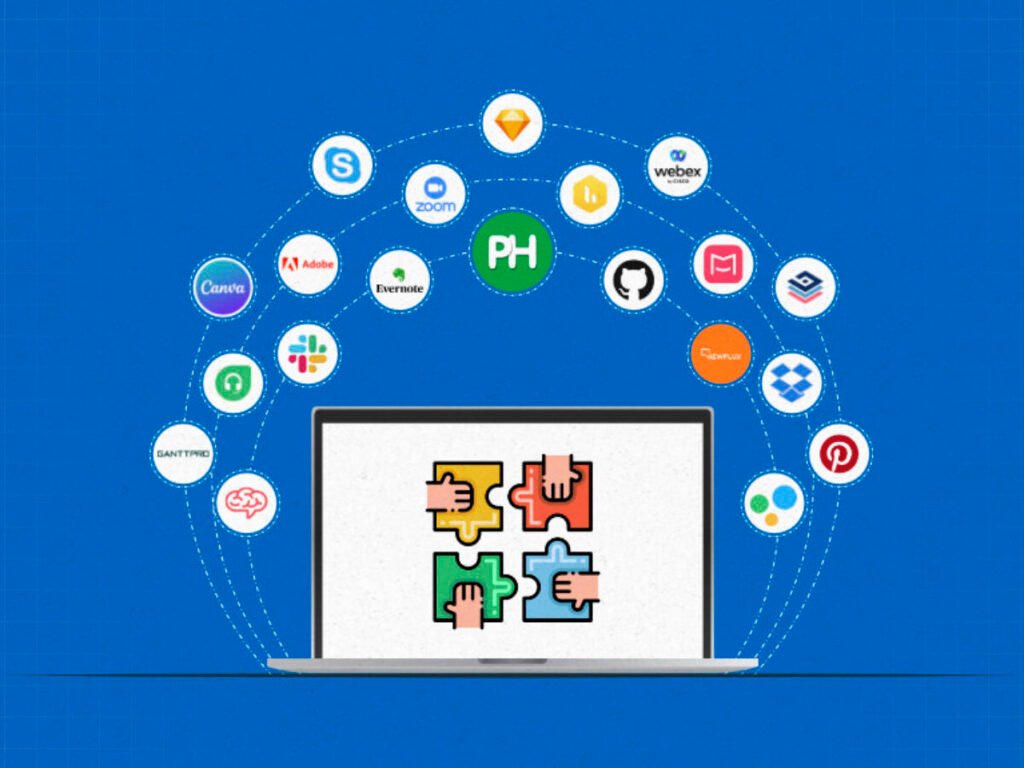
One of the hidden productivity costs in modern enterprises is application switching.
An employee may move between email, chat, CRM, project management software, cloud storage and analytics dashboards dozens or even hundreds of times during a workday.
Every switch creates cognitive friction.
The employee has to remember where information is stored, authenticate into different systems and reconstruct context.
Integrated collaboration environments can reduce this burden.
Instead of forcing employees to navigate multiple applications, relevant information and actions can be surfaced within the workflow.
This does not mean every business application needs to become one giant platform.
A better approach is to make important systems interoperable.
Employees should be able to move between tasks without constantly rebuilding context.
Personalization Will Become More Important
Enterprise collaboration has traditionally been relatively generic.
Everyone may see the same interface, notifications and information structures.
AI makes more personalized collaboration possible.
An employee’s role, projects, responsibilities and permissions can influence what information is surfaced.
A finance manager does not need the same information as a sales representative.
A project manager may need status updates while an executive needs high-level business risks.
Personalized collaboration can reduce information overload.
Instead of showing employees everything, systems can prioritize what is most relevant.
This can become increasingly important as organizations generate more data.
The challenge is no longer simply accessing information.
It is filtering information intelligently.
Collaboration Will Become More Proactive
Traditional productivity software waits for users to take action.
Employees open applications, check dashboards and search for information.
The future can be more proactive.
AI systems can monitor workflows and identify events that require attention.
For example:
- A customer contract is approaching renewal.
- A project milestone is at risk.
- An invoice requires approval.
- A customer issue has remained unresolved.
- A sales opportunity has gone inactive.
- A critical document has not received required approval.
Instead of requiring employees to discover these issues manually, intelligent systems can surface them at the right moment.
This changes collaboration from reactive to proactive.
The system becomes an active participant in helping teams coordinate work.
The Importance of Human Oversight
More intelligent collaboration does not mean organizations should automate every decision.
Human judgment remains essential.
AI systems can make mistakes. They can misunderstand context, produce inaccurate information or recommend inappropriate actions.
Enterprise collaboration therefore needs clear boundaries.
Employees should understand when AI is generating information, when it is retrieving verified data and when it is taking an action.
High-impact decisions should have appropriate human review.
Permissions should be carefully controlled.
Organizations should also maintain audit trails for important AI-driven actions.
Trust will become one of the most important factors in AI-powered collaboration.
Employees will adopt intelligent tools when they understand how those systems work and when they can rely on appropriate safeguards.
Security and Data Governance
The more connected collaboration becomes, the more important security becomes.
An intelligent collaboration platform may have access to conversations, documents, customer information and internal business data.
Organizations need strong controls around this information.
Access should be based on permissions and business requirements.
AI systems should only retrieve information that the requesting user is authorized to access.
Sensitive data should be protected throughout the workflow.
Organizations should also establish policies for how AI systems can use enterprise information.
This includes defining what data can be accessed, how long it can be retained and how AI-generated outputs should be reviewed.
The future of collaboration must be intelligent without becoming uncontrolled.
Measuring the New Definition of Productivity
Traditional productivity metrics often focus on activity.
How many emails were sent?
How many meetings were attended?
How many documents were created?
These metrics may not accurately reflect business value.
The future of enterprise collaboration should focus more on outcomes.
Organizations can measure:
- Time saved through automation
- Reduction in unnecessary meetings
- Faster decision-making
- Employee time spent searching for information
- Project completion rates
- Customer response times
- Knowledge retrieval speed
- Workflow completion times
- Employee satisfaction
- AI-assisted productivity gains
The objective is not to make employees busier.
It is to help them accomplish meaningful work with less friction.
The Workplace Is Becoming a Collaborative Network
The enterprise of the future will be less dependent on isolated departments and individual applications.
Instead, people, AI systems, applications, data and external partners will form interconnected networks.
A sales representative may collaborate with an AI assistant, a customer success manager and an automated CRM workflow.
A procurement manager may work with suppliers, internal finance teams and AI-driven approval processes.
A project manager may coordinate employees across multiple locations while relying on intelligent systems to monitor progress and identify risks.
Collaboration becomes an ecosystem rather than a collection of tools.
This is a fundamental shift.
The enterprise is no longer simply a collection of employees using software.
It is a connected system where humans and technology work together.
What Businesses Should Do Now
Organizations do not need to replace every productivity tool to prepare for the future.
They can start with focused improvements.
First, identify where employees spend excessive time searching for information or coordinating repetitive work.
Second, evaluate whether existing enterprise systems can be connected more effectively.
Third, identify high-value AI use cases that improve collaboration without introducing unnecessary risk.
Fourth, create clear governance around data access, AI usage and automated actions.
Finally, measure outcomes rather than simply counting systems can communicate without unnecessary friction and when AI can handle repetitive coordination while humans focus on judgment and creativity, productivity becomes more than individual technology adoption.
The objective should be straightforward:
Make it easier for employees to find information, make decisions and get work done.
Conclusion: Collaboration Is Becoming Intelligent Infrastructure
Enterprise collaboration is entering a new phase.
The first generation of workplace technology focused on communication.
The next generation focused on digital productivity.
The emerging generation is focused on intelligent coordination.
AI, enterprise search, automation, connected applications and intelligent agents are changing what collaboration can mean.
The future workplace will not simply give employees better tools for sending messages, attending meetings or managing documents.
It will help them understand context, find knowledge, coordinate actions and make better decisions.
The most successful organizations will be those that recognize collaboration as more than a software category.
It is becoming part of the organization’s digital infrastructure.
When people can access the right information at the right time, when systems can communicate without unnecessary friction and when AI can handle repetitive coordination while humans focus on judgment and creativity, productivity becomes more than individual efficiency.
It becomes an organizational capability.
The future of enterprise collaboration is therefore not about adding another productivity application.
It is about creating a connected environment where people, technology and knowledge can work together more intelligently.
The companies that build that environment effectively will be better positioned to move faster, adapt to change and compete in an increasingly digital B2B economy.


Leave a Reply