

Table of Contents
- Understanding AI-Driven Cyber Attacks
- Why AI vs AI Cyber Attacks Are Becoming a Reality
- How Enterprises Are Using AI to Fight Cyber Threats
- 2. Machine Learning for Threat Intelligence
- 3. AI-Driven Incident Response
- 4. AI Against AI-Generated Phishing Attacks
- 5. Behavioral Analytics and Identity Protection
- AI and Autonomous Security Operations
- The Role of Generative AI in Cybersecurity
- Challenges of Using AI for Cybersecurity
- Building an AI-Powered Cybersecurity Strategy
- The Future of AI vs AI Cyber Attacks
- Conclusion: Winning the AI Cybersecurity Race
Artificial intelligence has transformed nearly every industry, from healthcare and finance to manufacturing and enterprise technology. Organizations are using AI to automate operations, analyze massive datasets, improve customer experiences, and make faster business decisions.
However, the same technology that helps businesses innovate is also changing the cybersecurity threat landscape. Cybercriminals are increasingly using artificial intelligence to automate attacks, discover vulnerabilities, create sophisticated malware, and bypass traditional security defenses.
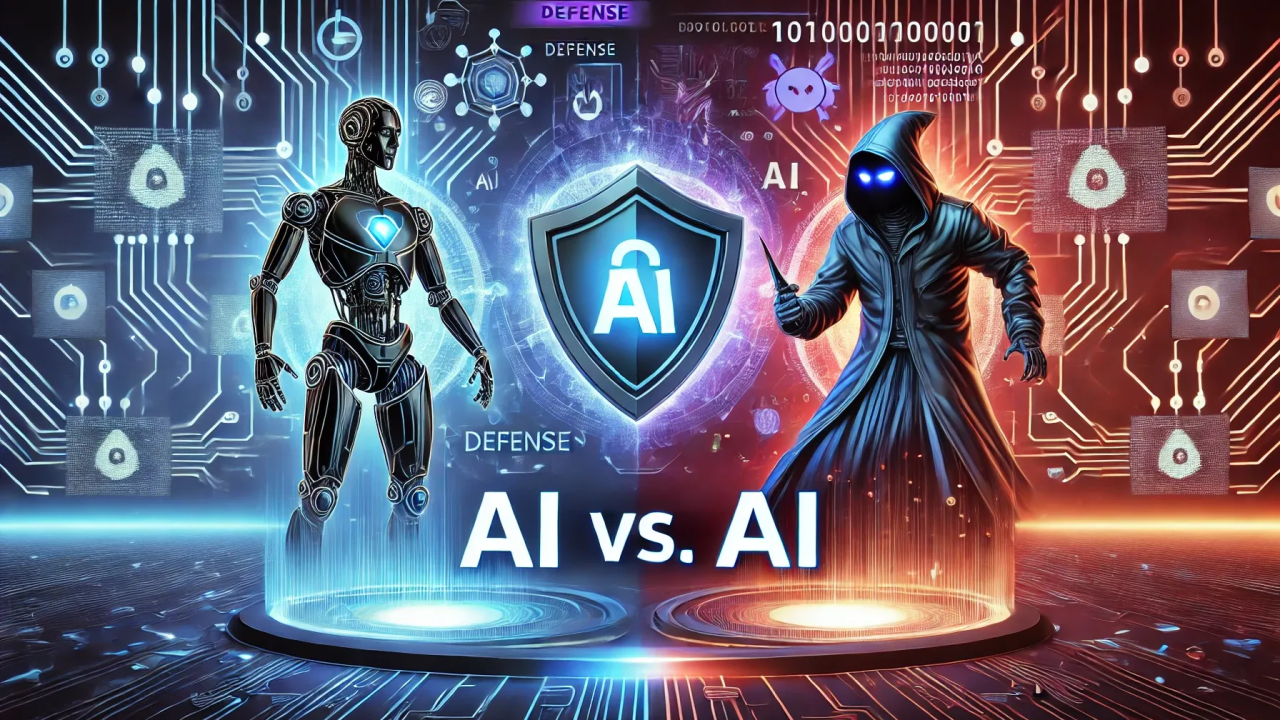
This has created a new cybersecurity battlefield: AI vs AI Cyber Attacks.
In this emerging environment, organizations are no longer defending only against human-operated attacks. They are facing machine-speed threats capable of adapting, learning, and evolving. To respond effectively, enterprises are turning to AI-powered security systems that can detect suspicious behavior, analyze threats in real time, and automatically respond to attacks.
The future of cybersecurity will increasingly involve intelligent systems competing against intelligent systems. Attackers use AI to scale their operations, while defenders use AI to improve detection, prevention, and resilience.
For enterprise technology leaders, understanding this shift is essential. AI is no longer just a business productivity tool—it has become a critical component of modern cybersecurity strategy.
Understanding AI-Driven Cyber Attacks
Traditional cyber attacks often required significant manual effort. Attackers had to research targets, write malicious code, identify weaknesses, and execute campaigns individually.
AI has changed this process.
Cybercriminals can now use machine learning and automation to accelerate many stages of an attack lifecycle.
AI-driven cyber attacks may involve:
- Automated vulnerability discovery
- AI-generated phishing messages
- Deepfake-based social engineering
- Intelligent malware adaptation
- Automated reconnaissance
- Credential attack optimization
- Data theft automation
- Evasion of security controls
AI allows attackers to create campaigns that are faster, more personalized, and harder to detect.
For example, traditional phishing emails often contain obvious warning signs such as poor grammar or generic messages. AI-generated phishing campaigns can create highly personalized communication based on publicly available information, making fraudulent messages significantly more convincing.
Similarly, attackers can use AI tools to analyze organizational systems and identify potential weaknesses much faster than traditional methods.
Why AI vs AI Cyber Attacks Are Becoming a Reality
The concept of AI fighting AI may sound futuristic, but it is already becoming part of modern cybersecurity strategies.
Attackers use AI to:
- Increase attack speed
- Automate repetitive tasks
- Improve social engineering
- Generate malicious content
- Find security gaps
Defenders use AI to:
- Detect anomalies
- Analyze network behavior
- Identify malware patterns
- Automate incident response
- Predict potential threats
This creates a continuous competition between offensive and defensive artificial intelligence systems.
The advantage will belong to organizations that can deploy AI responsibly, integrate it into existing security operations, and combine automation with human expertise.
How Enterprises Are Using AI to Fight Cyber Threats
1. AI-Powered Threat Detection
One of the biggest advantages of AI in cybersecurity is its ability to analyze enormous amounts of data quickly.
Modern enterprises generate massive volumes of security information from:
- Network traffic
- User activity
- Cloud platforms
- Applications
- Endpoint devices
- Authentication systems
Human security teams cannot manually review every event.
AI-powered security platforms analyze this data continuously to identify unusual patterns.
Examples include:
- A user logging in from an unusual location
- A sudden increase in file access
- Abnormal network communication
- Suspicious application behavior
- Unusual privilege escalation
By detecting these patterns early, AI helps security teams investigate threats before they become major incidents.
2. Machine Learning for Threat Intelligence
Machine learning enables cybersecurity systems to learn from previous attacks and improve detection accuracy over time.
Instead of relying only on predefined rules, AI systems can recognize emerging threat patterns.
Machine learning models can analyze:
- Malware behavior
- Attack techniques
- User activity patterns
- Network anomalies
- Historical security incidents
This allows organizations to identify previously unknown threats.
Traditional security methods often depend on known signatures. However, modern attackers frequently modify their techniques to avoid detection.
AI-based systems provide a more adaptive defense approach.
3. AI-Driven Incident Response
Speed is critical during a cyber attack.
The longer an attacker remains inside an environment, the greater the potential damage.
AI helps security teams respond faster by automating actions such as:
- Isolating compromised devices
- Blocking malicious connections
- Disabling suspicious accounts
- Prioritizing security alerts
- Collecting investigation data
Automated response reduces the time between detection and action.
For large enterprises managing thousands of systems, this speed can significantly reduce the impact of cyber incidents.
4. AI Against AI-Generated Phishing Attacks
Phishing remains one of the most common entry points for cyber attacks.
AI has made phishing campaigns more advanced by enabling attackers to create:
- Personalized emails
- Realistic business messages
- Fake customer communications
- Voice impersonation
- Deepfake content
To counter this, enterprises are using AI-based email security solutions.
These systems analyze:
- Writing patterns
- Sender behavior
- Communication history
- Links
- Attachments
- User activity
AI can identify suspicious messages even when they appear highly realistic.
5. Behavioral Analytics and Identity Protection
Modern cybersecurity increasingly focuses on understanding behavior rather than simply verifying credentials.
A compromised account may appear legitimate because the correct username and password are being used.
AI helps identify unusual behavior, such as:
- Accessing systems at unusual times
- Downloading abnormal amounts of data
- Attempting unauthorized actions
- Accessing unfamiliar applications
Behavioral analytics helps organizations detect compromised identities before attackers can cause significant damage.

AI and Autonomous Security Operations
Security Operations Centers (SOCs) manage thousands of alerts every day.
Many alerts require investigation, prioritization, and response.
AI-powered security operations help automate these processes.
AI can assist analysts by:
- Summarizing incidents
- Connecting related alerts
- Suggesting response actions
- Identifying attack patterns
- Reducing false positives
This allows cybersecurity professionals to focus on complex investigations instead of repetitive tasks.
The Role of Generative AI in Cybersecurity
Generative AI has introduced new opportunities and challenges.
Attackers may use generative AI for:
- Creating convincing phishing messages
- Generating malicious code
- Automating reconnaissance
- Creating fake identities
- Producing deepfake content
However, defenders can also use generative AI for:
- Security analysis
- Threat research
- Incident documentation
- Vulnerability explanation
- Security training
- Automated reporting
The same technology can create risks and strengthen defenses depending on how it is used.
Challenges of Using AI for Cybersecurity
While AI provides powerful capabilities, it also introduces challenges.
1. AI Systems Can Be Targeted
Attackers may attempt to manipulate AI systems through:
- Data poisoning
- Model manipulation
- Adversarial attacks
- Unauthorized access
Organizations must protect their AI infrastructure as carefully as traditional IT systems.
2. False Positives and False Negatives
AI is not perfect.
Security systems may:
- Flag legitimate activity as suspicious
- Miss sophisticated attacks
Human expertise remains essential for reviewing complex situations.
3. Lack of Skilled Professionals
Organizations need cybersecurity professionals who understand both security and AI technologies.
The shortage of skilled experts remains a major challenge.
4. Data Privacy Concerns
AI security systems often require access to large amounts of data.
Organizations must ensure:
- Proper data governance
- Privacy protection
- Regulatory compliance
- Responsible AI usage
Building an AI-Powered Cybersecurity Strategy
Enterprises should approach AI adoption strategically.
Establish Strong Security Foundations
AI works best when built on strong cybersecurity practices, including:
- Identity management
- Access controls
- Network security
- Endpoint protection
- Data protection
Combine AI With Human Expertise
AI should support cybersecurity teams, not replace them.
Human analysts provide:
- Context
- Judgment
- Strategic decision-making
- Risk assessment
The strongest security programs combine automation with human intelligence.
Continuously Train AI Models
Threat landscapes change constantly.
Organizations must regularly update AI systems with:
- New threat intelligence
- Updated security data
- Emerging attack patterns
Implement Zero Trust Security
Zero Trust principles strengthen AI-driven defenses by requiring continuous verification of:
- Users
- Devices
- Applications
- Access requests
AI enhances Zero Trust by identifying risks dynamically.
The Future of AI vs AI Cyber Attacks
The cybersecurity landscape will continue evolving as artificial intelligence becomes more advanced.
Future developments may include:
- Autonomous security agents
- AI-powered threat hunting
- Self-healing systems
- Predictive attack prevention
- Advanced behavioral monitoring
- Real-time cyber defense automation
Attackers will continue experimenting with AI capabilities, but defenders will also develop stronger AI-based security solutions.
The future of cybersecurity will not be about eliminating AI threats completely. Instead, it will involve creating intelligent defense systems capable of adapting as quickly as attackers evolve.
Conclusion: Winning the AI Cybersecurity Race
The rise of AI-driven threats has created a new chapter in cybersecurity. Organizations are entering an era where machines are used both to launch attacks and defend against them.
AI vs AI Cyber Attacks represents this ongoing battle between offensive and defensive artificial intelligence.
Enterprises that successfully adopt AI-powered cybersecurity can detect threats faster, respond more effectively, and protect increasingly complex digital environments.
However, technology alone is not enough. Successful cybersecurity requires a combination of artificial intelligence, skilled professionals, strong security practices, and responsible governance.
As cyber threats become more intelligent, organizations must become equally intelligent in their defense strategies. The future belongs to enterprises that can effectively combine human expertise with artificial intelligence to create stronger, faster, and more adaptive cybersecurity operations.



Leave a Reply