

Table of Contents
- Introduction
- What Is Threat Exposure Validation?
- Why Traditional Security Assessments Are No Longer Enough
- Why Threat Exposure Validation Matters
- How Threat Exposure Validation Works
- Key Components of Threat Exposure Validation
- Threat Exposure Validation vs. Vulnerability Management
- Threat Exposure Validation vs. Penetration Testing
- Common Attack Scenarios Validated
- Benefits of Threat Exposure Validation
- Industries That Benefit Most
- Challenges of Implementing Threat Exposure Validation
- Best Practices for Threat Exposure Validation
- The Role of Automation and Artificial Intelligence
- Future Trends in Threat Exposure Validation
- Conclusion
Introduction
Cybersecurity has become one of the most critical priorities for organizations of every size. As businesses accelerate digital transformation, embrace cloud computing, adopt hybrid work models, and connect an increasing number of devices and applications, their attack surface continues to expand. At the same time, cybercriminals are becoming more sophisticated, using advanced techniques such as ransomware, credential theft, phishing, zero-day exploits, supply chain attacks, and AI-powered malware to infiltrate organizations.
Many companies invest heavily in security technologies, including firewalls, endpoint detection and response (EDR), intrusion detection systems (IDS), intrusion prevention systems (IPS), security information and event management (SIEM) platforms, identity and access management (IAM), and cloud security tools. While these technologies are essential, simply deploying them does not guarantee protection. Security controls may be misconfigured, outdated, improperly integrated, or ineffective against evolving threats.
This is where Threat Exposure Validation (TEV) becomes invaluable. Rather than assuming security tools are functioning as intended, TEV continuously tests an organization’s security posture by simulating real-world attack techniques and validating whether existing defenses can detect, prevent, and respond to them.
Threat Exposure Validation enables organizations to identify vulnerabilities before attackers exploit them, prioritize remediation based on actual risk, and continuously improve their cyber resilience. Instead of reacting after a breach occurs, businesses can proactively verify their defenses and close security gaps before they become costly incidents.
This comprehensive guide explores what Threat Exposure Validation is, why it matters, how it works, its benefits, implementation strategies, challenges, best practices, and the future of proactive cybersecurity testing.
What Is Threat Exposure Validation?
Threat Exposure Validation (TEV) is the continuous process of testing and validating an organization’s cybersecurity controls against real-world attack techniques to determine whether they effectively detect, prevent, and respond to cyber threats.
Unlike traditional vulnerability scanning, which primarily identifies known weaknesses, TEV evaluates how security controls perform during simulated attacks.
It answers critical questions such as:
- Can our endpoint protection stop ransomware?
- Will our SIEM detect suspicious behavior?
- Can attackers bypass our email security?
- Are privileged accounts adequately protected?
- How effectively can our security team respond?
Rather than relying on theoretical assessments, TEV measures actual defensive effectiveness.
Why Traditional Security Assessments Are No Longer Enough
Organizations have long relied on periodic security assessments such as:
- Vulnerability scans
- Penetration tests
- Compliance audits
- Configuration reviews
- Risk assessments
While valuable, these methods have limitations.
For example:
- Vulnerability scans identify known weaknesses but don’t verify exploitability.
- Penetration tests provide point-in-time results.
- Compliance audits measure regulatory adherence rather than real security effectiveness.
- Manual testing is resource-intensive and infrequent.
Modern attack techniques evolve much faster than annual or quarterly assessments.
Threat Exposure Validation provides continuous testing instead of occasional evaluations.
Why Threat Exposure Validation Matters
Cyber threats evolve daily.
Attackers continuously develop:
- New malware variants
- Ransomware techniques
- Credential attacks
- Supply chain exploits
- Cloud attack methods
- Identity-based attacks
Organizations must ensure their defenses evolve just as quickly.
TEV enables businesses to validate:
- Detection capabilities
- Prevention controls
- Incident response readiness
- Security configurations
- Threat visibility
Instead of hoping security tools work, organizations gain evidence-based confidence.
How Threat Exposure Validation Works
Threat Exposure Validation typically follows a continuous testing cycle.
Step 1: Asset Discovery
Organizations first identify assets requiring protection.
These include:
- Servers
- Workstations
- Cloud workloads
- Applications
- APIs
- Identity systems
- Endpoints
- Network devices
Knowing what exists is essential before testing begins.
Step 2: Threat Modeling
Security teams identify relevant attack scenarios based on:
- Industry risks
- Threat intelligence
- Known adversary behaviors
- Regulatory requirements
- Business priorities
For example:
A financial institution prioritizes credential theft and fraud.
A healthcare provider focuses on ransomware and patient data protection.
Step 3: Attack Simulation
TEV platforms safely simulate attacker behavior without causing operational damage.
Common simulations include:
- Phishing campaigns
- Malware execution
- Privilege escalation
- Lateral movement
- Command-and-control communication
- Data exfiltration
- Credential dumping
- Cloud misconfiguration exploitation
These simulations mimic techniques used by real threat actors.
Step 4: Defense Validation
The platform evaluates whether existing controls:
- Detect attacks
- Block malicious actions
- Generate alerts
- Trigger automated responses
- Escalate incidents appropriately
Every security layer is assessed.
Step 5: Gap Identification
Testing reveals:
- Missing detections
- Misconfigured controls
- Weak policies
- Blind spots
- Ineffective monitoring
- Excessive permissions
Organizations receive prioritized remediation recommendations.
Step 6: Continuous Improvement
After fixing identified issues, organizations repeat testing.
Security validation becomes an ongoing cycle rather than a one-time project.
Key Components of Threat Exposure Validation
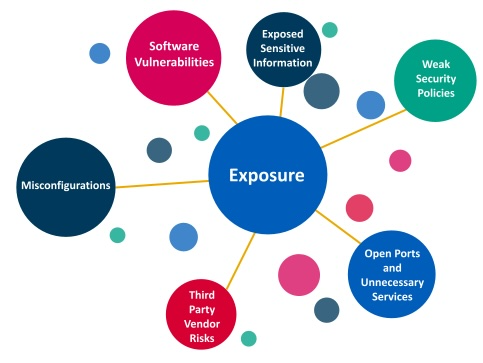
Attack Surface Visibility
Organizations need complete visibility into:
- Internal assets
- Internet-facing systems
- Cloud resources
- Third-party integrations
- Shadow IT
Unknown assets cannot be adequately protected.
Threat Intelligence Integration
TEV incorporates current threat intelligence to simulate:
- Active ransomware groups
- Emerging malware
- Known attacker tactics
- Exploited vulnerabilities
This keeps testing aligned with today’s threat landscape.
Security Control Validation
Organizations verify the effectiveness of:
- Firewalls
- Endpoint security
- Email security
- Identity controls
- Network segmentation
- Web application firewalls
- Cloud security tools
Every control should demonstrate measurable effectiveness.
Detection Validation
TEV confirms whether security operations detect:
- Suspicious logins
- Malware activity
- Insider threats
- Lateral movement
- Data exfiltration
Detection failures often represent the highest risks.
Response Validation
Organizations also assess whether:
- Alerts reach analysts
- Automated workflows trigger correctly
- Response playbooks execute properly
- Incident escalation occurs promptly
Rapid response minimizes damage.
Threat Exposure Validation vs. Vulnerability Management
Although related, these practices serve different purposes.
| Threat Exposure Validation | Vulnerability Management |
|---|---|
| Tests security effectiveness | Identifies vulnerabilities |
| Simulates real attacks | Scans for known weaknesses |
| Validates security controls | Prioritizes patches |
| Measures detection capability | Measures exposure |
| Continuous testing | Periodic scanning |
Organizations benefit from using both together.
Threat Exposure Validation vs. Penetration Testing
Penetration testing remains valuable but differs significantly.
Penetration Testing
- Manual
- Human-driven
- Limited duration
- Periodic
- Explores complex attack paths
Threat Exposure Validation
- Automated
- Continuous
- Frequent
- Scalable
- Measures ongoing defensive readiness
Many organizations use TEV between formal penetration tests.
Common Attack Scenarios Validated
Phishing Attacks
Organizations test whether:
- Email filters block malicious messages.
- Employees recognize phishing attempts.
- Credential theft protections activate.
- Security teams respond quickly.
Ransomware
Validation includes:
- Malware execution
- File encryption attempts
- Endpoint protection effectiveness
- Backup recovery readiness
Credential Attacks
Simulations evaluate defenses against:
- Password spraying
- Credential stuffing
- Brute-force attempts
- MFA bypass techniques
Insider Threats
Organizations test:
- Privilege misuse
- Unauthorized file access
- Data exfiltration
- Policy violations
Cloud Attacks
Validation examines:
- Misconfigured storage
- Identity permissions
- Container security
- API vulnerabilities
- Cloud workload protection
Benefits of Threat Exposure Validation
Proactive Risk Reduction
Organizations discover weaknesses before attackers do.
Improved Security Investments
TEV demonstrates which security tools work effectively and which require improvement.
Faster Incident Response
Repeated validation strengthens detection and response processes.
Reduced False Confidence
Many organizations assume their controls are functioning properly.
TEV provides measurable evidence instead of assumptions.
Better Compliance
Continuous validation supports regulatory frameworks by demonstrating ongoing security assurance and control effectiveness.
Stronger Executive Reporting
Security leaders can present meaningful metrics to executives, such as:
- Detection rates
- Response times
- Control coverage
- Risk reduction progress
These metrics support informed decision-making and justify security investments.
Industries That Benefit Most
Although every organization can benefit, TEV is particularly valuable in industries facing high cyber risk.
Financial Services
Banks and financial institutions validate defenses against fraud, ransomware, and credential theft.
Healthcare
Hospitals protect electronic health records, medical devices, and critical infrastructure.
Government
Public sector organizations strengthen resilience against nation-state attacks and protect sensitive information.
Manufacturing
Industrial organizations validate defenses for operational technology (OT), industrial control systems (ICS), and connected production environments.
Retail and E-commerce
Businesses test protections for payment systems, customer accounts, and online storefronts.
Challenges of Implementing Threat Exposure Validation
While highly beneficial, organizations may encounter several challenges.
Tool Integration
TEV platforms must integrate with SIEM, EDR, IAM, cloud security, and other existing technologies to provide comprehensive validation.
Resource Constraints
Continuous testing requires skilled personnel to review findings, prioritize remediation, and monitor progress.
Alert Fatigue
Frequent testing can generate large volumes of alerts if detection rules and workflows are not properly tuned.
Evolving Threat Landscape
Attack techniques change rapidly, requiring TEV programs to update simulations and threat intelligence continuously.
Balancing Testing and Operations
Organizations must ensure simulations do not disrupt business-critical systems while still providing realistic assessments.
Best Practices for Threat Exposure Validation
To maximize the effectiveness of a TEV program, organizations should:
- Conduct continuous rather than one-time validation.
- Prioritize testing based on business-critical assets and likely attack scenarios.
- Align simulations with frameworks such as the MITRE ATT&CK® knowledge base.
- Integrate current threat intelligence into validation exercises.
- Validate detection, prevention, and response capabilities—not just vulnerabilities.
- Test cloud environments, APIs, identities, endpoints, and on-premises infrastructure.
- Regularly review and update detection rules and response playbooks.
- Involve security operations, IT, risk management, and executive leadership in remediation efforts.
- Measure improvements over time using consistent security metrics.
- Combine TEV with vulnerability management, penetration testing, and security awareness training for a layered defense strategy.
The Role of Automation and Artificial Intelligence
Modern TEV platforms increasingly rely on automation and artificial intelligence (AI) to improve efficiency and accuracy.
AI can:
- Analyze attack paths and identify likely exploitation routes.
- Recommend prioritized remediation based on business risk.
- Detect unusual patterns that traditional rules may miss.
- Continuously adapt testing to emerging threat techniques.
- Reduce manual effort through automated validation and reporting.
Automation enables organizations to perform frequent security assessments without significantly increasing operational workloads.
Future Trends in Threat Exposure Validation
The future of TEV is being shaped by advances in cybersecurity technology and changing threat landscapes.
AI-Driven Attack Simulation
AI-powered platforms will generate adaptive attack scenarios that closely mirror real-world adversary behavior.
Continuous Attack Surface Management
Organizations will integrate TEV with External Attack Surface Management (EASM) and Cyber Asset Attack Surface Management (CAASM) to gain end-to-end visibility of digital assets.
Identity-Focused Validation
As identity becomes the new security perimeter, TEV will increasingly validate identity controls, privileged access, multi-factor authentication, and identity threat detection capabilities.
Cloud-Native Security Validation
With the continued growth of multi-cloud and hybrid environments, organizations will prioritize validating cloud workloads, containers, Kubernetes clusters, and serverless applications.
Executive Risk Dashboards
Future TEV solutions will provide real-time dashboards that translate technical findings into business risk metrics, helping leadership make faster and more informed security decisions.
Conclusion
In today’s rapidly evolving threat landscape, deploying cybersecurity tools is only the first step toward building a resilient security program. The true challenge lies in verifying that those tools, processes, and teams can effectively detect, prevent, and respond to real-world attacks. Threat Exposure Validation bridges this critical gap by continuously testing security defenses against realistic attack scenarios, uncovering weaknesses before adversaries can exploit them.
By combining automated attack simulations, threat intelligence, security control validation, and continuous improvement, TEV enables organizations to move from reactive cybersecurity to proactive cyber resilience. It helps security teams prioritize remediation efforts, optimize existing investments, improve incident response, and maintain confidence that their defenses are prepared for emerging threats.
As cyberattacks continue to increase in sophistication and frequency, organizations can no longer rely solely on periodic assessments or assumptions about their security posture. Continuous validation has become an essential practice for modern cybersecurity. Businesses that embrace Threat Exposure Validation today will be better equipped to reduce risk, strengthen operational resilience, protect critical assets, and stay one step ahead of attackers in an increasingly complex digital world.




Leave a Reply