

Table of Contents
- The Challenges Facing Traditional SOC Operations
- What Is SOC Modernization?
- The Role of AI in Modern SOC Operations
- Autonomous Response: The Next Step in SOC Evolution
- AI and Human Analysts: A Collaborative Model
- Key Technologies Powering Modern SOCs
- Real-World Use Cases
- Measuring the Impact of SOC Modernization
- The Future of SOC Operations
- Conclusion
Security Operations Centers (SOCs) are under more pressure than ever. The volume, velocity, and sophistication of cyber threats have outpaced traditional security tools and manual workflows. Alert fatigue, limited staffing, and slow response times leave organizations vulnerable—even when they have advanced security technologies in place.
To keep up with today’s threat landscape, organizations are modernizing SOC operations with AI and autonomous response. By leveraging artificial intelligence, machine learning, and automation, modern SOCs can detect threats faster, respond in real time, and reduce the burden on security analysts.
This article explores how AI-driven and autonomous security operations are transforming the SOC, the benefits they deliver know, and what the future of SOC modernization looks like.
The Challenges Facing Traditional SOC Operations
Despite investments in SIEM, EDR, and network monitoring tools, many SOCs struggle with the same core problems:
- Alert overload: Thousands of alerts daily, many of them false positives
- Manual investigations: Time-consuming triage and correlation processes
- Limited visibility: Disparate tools operating in silos
- Skills shortage: Difficulty hiring and retaining experienced analysts
- Slow response times: Delayed remediation increases breach impact
Traditional SOC models are reactive and heavily dependent on human intervention—an approach that no longer scales in modern environments.
What Is SOC Modernization?
SOC modernization involves transforming security operations by integrating AI, automation, and autonomous response capabilities into detection, investigation, and remediation workflows.
A modern SOC is:
- Intelligence-driven rather than alert-driven
- Proactive instead of reactive
- Automated where possible, human-led where necessary
AI-powered security operations platforms unify data, reduce noise, and enable faster, more accurate decision-making.
The Role of AI in Modern SOC Operations
AI-Powered Threat Detection
Artificial intelligence enables SOCs to detect threats that traditional rule-based systems often miss. Machine learning models analyze vast amounts of data to identify:
- Behavioral anomalies
- Unknown and zero-day threats
- Advanced persistent threats (APTs)
- Insider threats
AI continuously learns from new data, improving detection accuracy over time and reducing false positives.
Intelligent Alert Prioritization
Not all alerts are created equal. AI helps SOC teams by:
- Correlating events across multiple tools and data sources
- Assigning risk scores based on context and behavior
- Highlighting high-confidence threats that require immediate attention
This significantly reduces alert fatigue and allows analysts to focus on real incidents instead of noise.
Automated Investigation and Context Enrichment
AI-driven SOC platforms automatically enrich alerts with relevant context, including:
- Threat intelligence feeds
- Historical activity
- User and device behavior
- Asset criticality
Automated investigations that once took hours can now be completed in seconds.
Autonomous Response: The Next Step in SOC Evolution
While automation assists analysts, autonomous response goes a step further by executing predefined or AI-driven actions without human intervention.
What Is Autonomous Response?
Autonomous response refers to the ability of security systems to:
- Contain threats in real time
- Isolate compromised endpoints
- Block malicious IPs or domains
- Disable compromised accounts
- Roll back malicious changes
These actions are triggered based on confidence levels and policies defined by the organization.
Benefits of Autonomous Response in the SOC
Faster Incident Containment
Autonomous response reduces dwell time from hours or days to seconds, limiting damage and data loss.
Consistent and Repeatable Actions
Automated responses follow approved playbooks, eliminating human error and inconsistency.
Reduced Analyst Workload
Analysts are freed from repetitive tasks and can focus on threat hunting and strategic initiatives.
Improved Security Posture
Real-time response prevents threats from escalating into major breaches.
AI and Human Analysts: A Collaborative Model
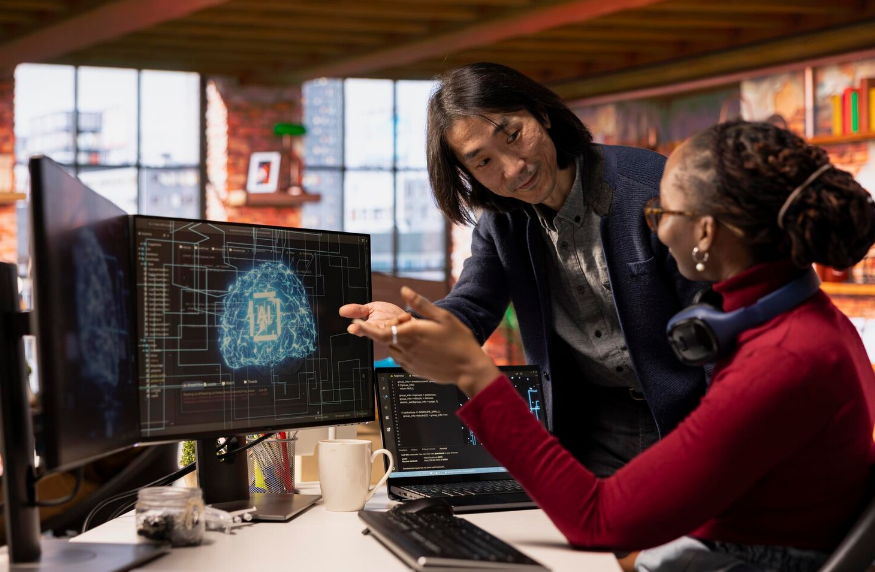
Modern SOCs are not about replacing human analysts—they are about augmenting them.
AI handles:
- Data processing at scale
- Pattern recognition
- Repetitive investigations
- Low- to medium-risk response actions
Human analysts focus on:
- High-risk and complex incidents
- Strategic threat hunting
- Security architecture improvements
- Policy and decision oversight
This human-AI collaboration creates a more resilient and effective SOC.
Key Technologies Powering Modern SOCs
Several technologies work together to enable AI-driven and autonomous SOC operations:
- AI and Machine Learning for detection and analysis
- SOAR (Security Orchestration, Automation, and Response) for workflow automation
- XDR (Extended Detection and Response) for unified visibility
- Threat Intelligence Platforms for external context
- Cloud-native architectures for scalability
Together, these tools form an integrated security operations ecosystem.
Real-World Use Cases
Ransomware Defense
AI detects early-stage ransomware behavior and autonomously isolates infected systems before encryption spreads.
Phishing and Account Takeover
Autonomous response disables compromised accounts and blocks malicious domains instantly.
Insider Threat Detection
Behavioral analysis identifies unusual access patterns and triggers preventive actions.
Cloud Security
AI monitors cloud environments for misconfigurations and suspicious activity, responding automatically to reduce risk.
Measuring the Impact of SOC Modernization
Organizations modernizing their SOC operations with AI and autonomous response typically see:
- Reduced mean time to detect (MTTD)
- Reduced mean time to respond (MTTR)
- Fewer false positives
- Improved analyst productivity
- Lower operational costs
These improvements translate directly into stronger cybersecurity resilience.
The Future of SOC Operations
The future SOC will be:
- Autonomous by default
- AI-driven across the entire incident lifecycle
- Integrated with zero-trust security models
- Designed for hybrid and cloud-first environments
As threats continue to evolve, SOCs that rely solely on manual processes will fall behind. AI and autonomous response are no longer optional—they are essential.
Conclusion
Modernizing SOC operations with AI and autonomous response is critical for defending against today’s advanced cyber threats. By combining intelligent detection, automated investigation, and real-time response, organizations can transform their SOCs from reactive alert centers into proactive security engines.
In a world where speed and accuracy define cybersecurity success, AI-powered and autonomous SOCs provide the advantage organizations need to stay ahead of attackers.

Leave a Reply